Site Security Tool Box Talk Fall

Learn about the need for effective advocacy research, and gain skills in conducting such research, in order to be able to back up your statements with facts and statistics. • What do we mean by conducting research? • Why should you do advocacy research? • When should you do advocacy research?
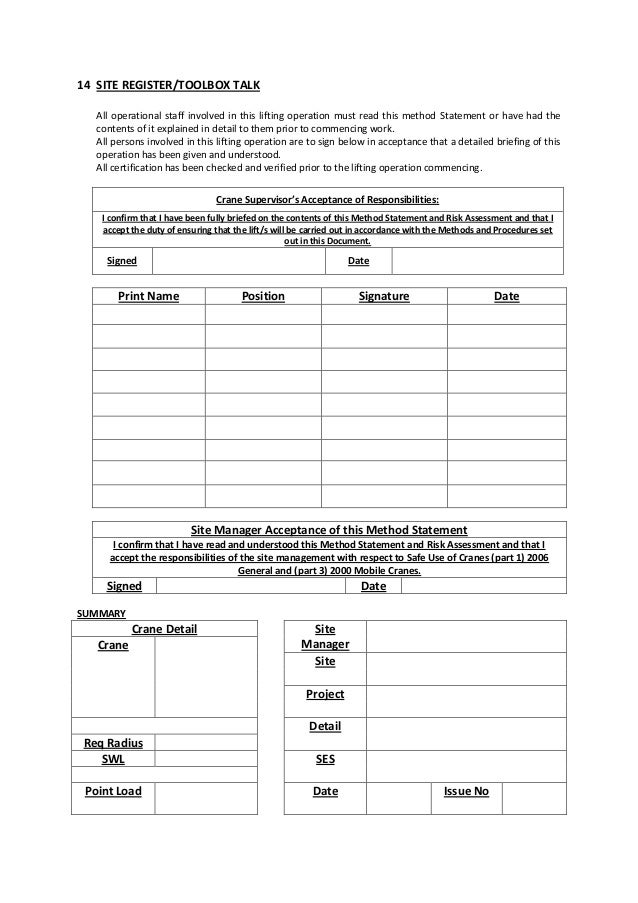
4.4 Environmental. 4.5 Security. 4.6 Substance abuse policy. 4.7 Jewellery policy. 4.8 Knife policy. 4.9 HSE awareness at onshore and offshore worksites. Tasks and to assist you when involved in toolbox talks or similar. 7 people must pay attention to those new to the site, watch out for their safety. The Tool Box needs your help to remain available. Your contribution can help change lives.
• How do you conduct research? There are all kinds of advocacy. Your goal may be to raise the profile of an issue, to provide for the needs of a particular segment of your community, to protect citizens from physical or economic harm, to stem a disease before it becomes epidemic in the area, or to expose and oust a corrupt official, among others.
You may be concerned with human services, health care, education, the environment, economic development, political issues, human rights, or the overall physical, social, and economic health of your community. You may be trying to influence legislators and other policy makers, to hold officials and corporations accountable for their actions, to change the behavior or methods of health and human service providers, or to increase cultural awareness and competence among all members of the community. Regardless of what your effort is aimed at, you'll need information before you can do anything else. How many working people in your community have no health insurance? What exactly is that company dumping into the river, and what effects does it have?
How do you know that the grant-funded program you want to continue has been effective? Where are you going to get the material for that fact sheet you need for the public meeting on Friday? In order to persuade legislators or other officials to change laws and policies, to provoke an official investigation, or to sway public opinion, you'll need information. To get it, you'll almost undoubtedly have to do some research. That could mean anything from combing through piles of documents in the stacks of a library to taking photos and talking to witnesses. Some of your searching may be tedious, and some may be exciting, but all of it will involve work.
What do we mean by conducting research? The word 'research' often conjures up images of someone sitting in a library squinting at a large book with very small print, or hovering over a beaker of nasty-looking liquid in a chemistry lab.
Don't let those images scare you, though - research really means doing some work to find the answer to a question. The question may be relatively simple: What percentage of people who visit the community health clinic have no other way to get medical treatment? It may also be extremely complex: What's the most effective way to provide health insurance for working people in the community who don't have it? Different kinds of questions require different kinds of answers, and different kinds of answers require different kinds of research to ferret them out. Knowing what you need is the first step. • If the answer you're looking for is one of known fact - What's the chemical composition of a certain substance?
What effects does it have on humans? - then you're probably going to find it by looking through books or articles in a library, or by consulting an expert. • If you're seeking reinforcement for your advocacy for a particular intervention - How effective is that health promotion program? Why use this method instead of that one?
Why ban this substance in food products? - then you may have to conduct a study of some sort, or sift through existing records. • If you're trying to find facts that will help you convince policy makers to move in a particular direction - How many people in the community are employed, but have no health insurance? - you may find yourself working in the municipal archives or studying census data.
• If you're searching for evidence of harmful and/or illegal action on the part of a corporation or government agency - Is that paper mill dumping waste directly into the river again? And why isn't the regulatory agency doing anything about it? - you may have to do some actual detective work: searching through documents, taking pictures, analyzing samples of river water, talking to employees. Research encompasses all these methods and more. What kind of research you should do depends on what and what kind of information you need.
Why do research? The advantages of whatever you're advocating for may seem obvious to you, but that doesn't mean they're obvious to others. You'll have to show them that your ideas will significantly benefit the community. Research can help you toward this goal in several ways: • Research gives your advocacy substance.
Your research adds facts and statistics to your belief and passion. The latter two are important, but they won't actually convince too many people who disagree with you. Hard evidence might. • Research gives you new information to help make your case. Often, your research will turn up powerful information on your side that even you didn't know about. It will also help you determine how much funding is needed, approximately how long it will take to see results, and the likely consequences of doing nothing. Ibm Usb Serial Parallel Adapter 22p9036 Driver Windows 7.
• Research can show you what's most likely to address your issue successfully. (As this item indicates, your research will probably serve multiple purposes.
It may help you plan and design your effort as well as advocate for it.) As an advocate, you have to know exactly what to advocate for. What have others done that's worked? What affects the issue in an experimental situation? The answers to these and similar questions will put you in a position to choose and advocate for strategies that are apt to be effective. • Research can provide you with anecdotes and examples to use.
While statistics are most convincing in certain situations, one actual example is often more powerful than reams of data, because it makes the issue immediate and real. An anecdote doesn't prove a case, but it can make it easier for people to understand exactly what the issue is about. Hearing someone else's story makes people realize 'That could be me,' and gives politicians a way to explain to voters why they favor a policy or bill. • Research can confirm what you were already sure of. You may 'know' that you're right about a particular issue, but it brings a great deal more security to be able to say that all the experts in the field agree with you, or that studies have shown that what you're advocating for works really well.
• Research allows you to make cost-benefit arguments. If 85% of former inmates return to jail; and if it costs $65,000.00 a year to keep one person in jail; and if a program that keeps 85% of former inmates out of jail costs $20,000.00 a year per person - you do the math. The prevention program sounds expensive, but it will actually save the taxpayer an average of $28,500.00 a year per former inmate. Research will tell you the costs of both alternatives and the success rates of both at keeping people from returning to jail. The math works this way: If you start with 100 former inmates, and expect that 85 of them will be back in jail, those 85 will cost $5,525,000.00 (85 x $65,000) annually to keep in jail. If the same 100 former inmates participate in the alternative program, it will cost $1,700,000.00 (85 x $20,000) for the 85 who are successful, and $975,000.00 (15 x $65,000) for the 15 who go back to jail, for a total of $2,675,000.00. The difference between $5,525,00.00 and $2,675,000.00 is $2,850,000.00, divided by 100 former inmates gives $28,500.00 per person, the savings from using the alternative program.
And that's only in the first year, or however long the alternative program lasts: once the program is over, the 85 who are successful cost the public nothing. In fact, they're probably working and paying taxes. It's only the 15 still in jail that taxpayers are funding. • Research gives you credibility. If you do your research well, it identifies you as a serious advocate who does the groundwork before you try to convince people of your position. It will make people more willing to listen to you, and to believe what they hear. • Research can short-circuit the opposition.
If you've done careful research not only on your own position, but on the opposition's position as well, you'll have the information to answer their charges and questions, and either to disprove their claims, or to make reasonable and logical arguments for the soundness of your position over theirs. • Research sets you up as the expert on the issue.
If you become known as the one with the right answers, people - legislators and other officials, concerned groups, the general public - will come to you with their questions and concerns. When you're recognized as the authority, your advocacy position becomes infinitely stronger. When should you do advocacy research? Any advocacy requires some basic research, but there are times when research is particularly valuable.
When you're trying to get legislation passed You'll need research for two reasons: • To show the need for the legislation. Federal funding for AIDS research increased when advocates were able to demonstrate that the disease had reached epidemic proportions, and that it affected not only gay men, but other segments of the population as well. Similarly, adult literacy advocates in Massachusetts were able to secure a commitment to adult education and an increased funding appropriation when they presented legislators with a list of more than 13,000 people on waiting lists for programs around the state. • To show public support for proposed legislation. When legislators know that their constituents really want them to vote for a bill, or to address a particular issue, they'll generally do it, especially in an election year. If you can demonstrate - through surveys, interviews, or other means - that the public backs your effort, it puts you in a much stronger position. When you're seeking to arouse community concern about an issue that needs attention Often, the research needed here is statistical.
What percent of teens drop out of high school in the community, and how does that compare to other, similar communities? Have there been increases in homelessness over the past year, or the past several years? Are there more homeless families than there were?
Has youth violence increased in the community, and, if so, who are its victims? Numbers are what's required here, so that people can see trends in issues of importance to the community. Do numbers lie? Mark Twain said that 'there are lies, damned lies, and statistics.' By that he meant that you can make the same statistics seem to mean different things by manipulating them in different ways. If there has been a five-year upward trend in homelessness, for instance, one group may state that and stop there, while another may point out that the trend in fact peaked three years ago, and has been heading downward since. It may not have gotten down to where it was five years ago, but it's headed in that direction.
So two groups, using the same statistic, can come to different conclusions: that growing homelessness is a problem; or that homelessness is on the decline, and is not a problem. An intelligent opponent - and, if you have opponents, you should always assume they're at least as smart as you are, and that they'll do their homework - could demolish your argument if you aren't careful how you use the numbers you find. Your research has to be impeccable - always make certain that information that seems to prove your point actually does so, that you don't exaggerate to make your case stronger, and that you pay attention to anything that seems to show the opposite. You should never have to argue about whose numbers are 'right.' Yours should always be right, because you've checked them carefully, and analyzed them so you know what they really mean.
If they don't agree with what you're advocating, you can reframe your issue - present it in a different way, or restate the problem it presents. In the case of homelessness, for instance, you may want to argue that whether it's rising or declining, it's still a serious problem that the community should tackle: 'One homeless person in our community means we're not doing what we should. Even one is too many, and we have 450.' If your research in fact shows that you're dead wrong about what you're trying to prove, you may have to rethink it. No matter how much you may 'know' emotionally that you're right, if the evidence says otherwise, you have to admit it and make sense of that.
When important programs or services or whole groups of people are under attack Some examples: • Food stamps and fuel assistance programs are often characterized by opponents as 'unnecessary.' Employing research to show how many people in the community need and use them helps voters understand why they are necessary. • Immigrants may be blamed for employment shortages, when in fact those shortages are usually the result of economic trends and factors that have little to do with immigration. Furthermore, many immigrants take jobs that employers have difficulty filling - low wage, dirty, and physically demanding (migrant labor, for example). Your research can demonstrate that those who accuse immigrants of responsibility for unemployment actually have no argument. When government officials are corrupt or otherwise guilty of wrongdoing Research can serve to find the proof that exposes corrupt, dishonest, or unethical officials. From the small town treasurer who helps herself to a few thousand dollars from municipal funds to Richard Nixon, whose coverup of the Watergate break-in cost him the Presidency, officials who violate the law are generally caught by careful research rather than by some dramatic event.
Bob Woodward and Carl Bernstein's interviews with various participants in the Watergate affair, for instance, eventually led them to the source known as 'Deep Throat' who blew the whistle on the Nixon administration. When government or another entity is lying to the public At some times, there are things the public, even in a democratic society, should not know.
If, in World War II, the press had routinely published the locations of Allied ships, for instance, the enemy would have been extremely pleased - and the ships in question would have been sunk. When the government or another entity lies to the detriment of the public good, however, or to protect itself politically, that is another matter. Two examples: • Cigarette manufacturers for years produced phony scientific studies that 'proved' that smoking was harmless and non-addictive, while reputable scientists invariably found the opposite. The reputable research convinced the Surgeon General's office, and a large majority of the American public, that profits were more important to the cigarette companies than people's lives, and smoking in America dropped sharply. • During the Reagan administration in the U.S., James Watt, the anti-environment Secretary of the Interior, constantly found himself contradicted in the press by scholars or journalists who had researched the accuracy of statements he had made, and found them to be false.
Ultimately, Watt became such a political liability that he had to be replaced. Had no one bothered to check his accuracy, he could have continued to misrepresent environmental issues for political reasons, at the expense of the public interest. When it's necessary to prevent harm The source of acid rain in the eastern U.S. Was a mystery until research showed that it was caused by substances released into the air by factories in the Midwest. If you're wondering why there are no more fish in the local river, or if there's some question about your drinking water, you might want to look into acid rain effects, or spend some time in the town archives and in the library finding out what substances local factories are dumping in the river, and what chemical effects those substances have.
Environmental threats to public well-being aren't the only kinds of harm that research can help prevent. Looking into the effects of proposed government policies can save citizens from unfortunate social or economic consequences. Or help to correct those consequences, if the policy is one that's been shown to be successful. Research into the relationships among corporations, accounting firms, and Wall Street analysts could perhaps have saved investors from such financial disasters as the collapse of Enron, one of the largest American corporations. Many thousands of middle-income citizens lost their retirement money in that debacle, either directly or through pension fund investments. When it's important in order to further the public interest In these situations, you may not be looking for anything specific.
Health care advocates, for instance, often conduct research to determine a community's health care needs, and what could best meet those needs, so that they'll know exactly what to advocate for. How do you do research? Since, as we'll discuss in more detail below, there are many different types of research, there's no one set method for doing all types.
We will, however, propose some general guidelines that apply to any kind of advocacy research, and try to give you some more specific pointers on conducting each of the types of research you're likely to encounter. General guidelines for research Ask for help You don't necessarily have to do everything yourself. There may be many possibilities for assistance out there. • Other activists. If you're concerned about an issue, the chances are others are, too.
If you can find them, you may also find that much of the information you need is already available, or that they're willing to help you get it. • Academics or other experts.
Depending on what you need to find out, help may be as close as the relevant department of a local university. If, for instance, you need to understand the chemistry of a pollutant, a chemistry grad student or professor may be more than willing to help. You may be able to find someone who's an expert on a particular area of law or business or public health who can save you countless hours of searching on your own.
• Librarians. Libraries are obviously great sources of information, and librarians are usually both eager and able to help. That's their job, and many librarians view difficult research requests as interesting and enjoyable challenges. They, too, may be able to save you enormous amounts of time. • Journalists. If the issue you're addressing, or your area of advocacy, involves an interesting story or something the public clearly needs to know (Is the community's drinking water safe?), an investigative journalist may be more than willing to work with you. Many of the biggest news stories of past decades - the questions about American intelligence gathering before the Sept.
11 terrorist attacks, for instance - have resulted from investigative journalism. Most reporters would love the chance for a big story, and they have vast information resources available. • People inside an entity you're researching. If there's something illegal or unethical going on, there may be someone inside the entity whose discomfort with the situation will make him willing to talk to you.
Try to find out if someone's already done the research you're planning There may already be studies relating to the issue you're concerned with, or someone else in the community may already have spent weeks finding the information you're looking for. Don't make life any more difficult than it has to be: look around before you begin. Learn the basics about your issue Your research will do you no good if it isn't accurate and to the point. If there are laws involved, make sure you have read and understood them before you look for evidence that they've been broken, or need to be changed. If you suspect that someone might be violating professional ethics, find out whether that profession has a formal code of ethics, and study it carefully.
If there's an environmental issue, learn the science behind it, at least well enough so that you can explain it, and so that you can understand and counter arguments against your position. If you read something you don't understand, find help. Consult an attorney or legislator, a science teacher, your brother-in-law - whomever you can find that actually knows about the area you need to understand.
If your information is wrong, or if you don't fully understand what you're talking about, you'll undermine your position, and your advocacy will fall on deaf ears. Know what you're going to use the information for Knowing the reason for gathering the information will help you decide exactly what to look for, how much you need, and what form it needs to be in. Some common reasons for advocacy research: • To call public attention to an issue. In this case, you might look for information (statistics or anecdotes) that will help people understand how the issue relates to their community. • To demonstrate public support for an issue.
A survey could show that the community overwhelmingly supports funding for a new school, for instance. • To guide your advocacy efforts. Survey results that tell you what the public, or particular segments of the public, actually think about an issue will help you decide how to approach it. • To bolster your argument with facts, theories, respected opinions, or others' experience.
• To counter opponents' false or mistaken claims or counter-arguments. This is a situation in which your research must be, as we mentioned before, impeccable. Don't fudge anything - someone will be waiting for the opportunity to pounce on the least inaccuracy or error, and to use it to try to discredit your whole argument. Use only real, reliable figures, and don't over- or underestimate their meaning. Don't stretch a point - assuming that all high school dropouts are illiterate, for instance - or it will come back to haunt you.
Don't mistake anecdote for fact: one story doesn't prove a point. Perhaps most important, don't give in to the natural tendency to overestimate the value of a piece of information that supports your point of view. If you can't make a strong case with the information as it is, you may need to reexamine your assumptions.
• To demonstrate that addressing the issue would have benefits for the community or society as a whole, as well as for those directly affected. You might want to show the benefits to business resulting from adult education programs, for instance, or the increase in local real estate values that increased spending on education could bring.
• To prove wrongdoing or questionable practice on the part of an entity or official. This might mean doing research to show that the entity was actually committing the wrong or harmful act - bribery, illegal polluting, stealing public funds - that you said it was; or it could mean finding evidence that what the entity freely admits doing - using a given substance in its products, engaging in particular practices in the Third World - is in fact wrong or harmful. Be skeptical about your sources, and check all your facts twice All sources of information are not equally reliable. Reputable news organs like the New York Times, the Washington Post, and Newsweek, for instance, demand that all stories be carefully checked before they're published.
That doesn't mean that they never get anything wrong, but it does mean that they're less likely to than, say, the National Enquirer. The Internet is a great source of information, but there's no guarantee that any of it is accurate. Anyone can establish a website and put on it practically anything she wants to, without regard to whether it's accurate or not.
If you find information on the Internet, unless it's from the website of a generally reliable source - the New York Times, the Encyclopedia Britannica, your state university, the U.S. Treasury Department - it's best to be cautious about using it without first checking it elsewhere. As mentioned several times in this section, if your facts - even facts that aren't necessarily an important part of your argument - are wrong, your opposition will make you pay for it.
Even something as apparently reliable as a chemistry textbook might not be trustworthy. If it was published 30 years ago, it might contain 'facts' that have since been reinterpreted. Always check your findings if your source is even the slightest bit questionable.
Be persistent Information may be difficult and tedious to find. An agency or organization - not necessarily one you're researching - may throw up roadblocks. You may have to cut through mountains of red tape just to gain access to a paper you want to see, or to get some small piece of information. It's common for citizens' groups to have to sue under the Freedom of Information Act (see below) to get the government to release public documents. Keeping at it is perhaps the most important research tool there is. Types of research, and some suggestions for each 'Academic' research This term refers here to seeking facts, general information on a topic, historical background, study results, etc., that have been published, or exist in public documents.
There are a number of ways to get this kind of information: • Use libraries. Both public libraries and more specialized ones - university libraries, law libraries, genealogical libraries, Presidential libraries, etc. - are open to the public for research on some basis (sometimes free, sometimes for a fee or membership charge, for instance). Librarians at all types of libraries tend to be both knowledgeable and helpful. If you have easy access to Washington, D.C., New York City, or Boston, the Library of Congress, the New York Public Library, the Boston Public Library, and the Harvard University library system are four of the largest and most comprehensive in the world.
• Take advantage of newspaper archives. Newspapers keep archives - generally consisting of a complete collection of past copies of the newspaper - in many cases going back over a hundred years. Many are now on microfilm or electronic media, and are often available through library information services or on the Internet (sometimes for a fee). • Consult government and other archives.
Federal, state, and local governments in the U.S. Keep archives of government documents. They are generally available for research to any citizen, but, in some cases, you may have to travel to a particular place (Washington, DC, or a regional archive branch, e.g.) to find the documents you're looking for. Some organizations, corporations, and institutions also keep archives that may be helpful. Use the Freedom of Information Act to gain access to public documents.
Provides for public access to all executive branch documents and records of the U.S. Federal government, except those whose release might jeopardize national security or compromise the safety or privacy of individuals, or which are otherwise exempt under the provisions of the law. FOIA applies only to federal government documents, however, and only to those of government agencies and other parts of the executive branch. It doesn't apply, for instance, to the records of Congress, a corporation, a private organization or institution - for-profit or nonprofit - that receives no public money, or a private citizen (although some of these may be public documents as well).
However, most states do have their own versions of the FOIA (often called Public Records Acts) that cover state and local agencies and officials. For links and more information about individual states, the Freedom of Information Center at the University of Missouri, which also has information on FOIA. Other government and corporate documents Use other government and corporate documents. There are a number of websites of watchdog organizations that try to hold governments or corporations accountable for what they do. They keep track of the activities of these entities, and try to publicize them when they are not in the public interest.
• Use census data. Demographic (population, age, race, education, income, etc.) and a surprising amount of other information is available by census tract, town, county, state, etc. • Surf the Internet. The Internet, with literally millions of websites from all over the world, is probably the single largest source of information on the planet. It may also be the least reliable, in that, as explained above, there is no control on what information may be posted. You have to be cautious, unless the website is one that is known to be reliable and accurate. Given that caution, however, there is almost no limit to what you can find if you search persistently enough.
• Ask sympathetic experts. People who are experts in the issue or field you're involved with, and who are sympathetic to your cause (or simply interested in what you're doing) are often willing to provide you with information, or even conduct some of your research pro bono (as a public service).
Interviews and conversations When the information you're looking for concerns the community's past experience with an issue, the relationships between key people, what's happening inside that factory, or someone's personal experience, the best way to find it is usually. You may use informal conversations, structured interviews, or something in between, but the purpose in all cases is to get as much information as possible. How to find and talk to the right people: • Start with people you know.
Even if they themselves may not have the information you're looking for, the folks you know - who trust you and can vouch for you - can lead you to those who do. Furthermore, your friends and acquaintances may have helpful information you haven't even thought of asking for.
• Network like crazy. Ask everyone you interview to recommend others who might be helpful. Put the word out to networks you're already a member of (friends, clubs, e-mail lists, professional associations, church groups, etc.) You never know just who might have that one crucial piece of information, or know the person who has it. • Decide whether you'll get better results from informal conversations or structured interviews.
In some cases, people are more likely to open up in a relaxed and informal atmosphere. In others, you'll get better information if you use a formal interview.
Where people are likely to be mistrustful of strangers, it can be a toss-up: a formal structure may help them focus on the content of what they're saying, but it may also increase the distance - and the mistrust - between them and the interviewer. Often, you have to make a gut decision about what will work best. Structured interviews A structured interview is constructed in a particular way in order to yield particular information. Formal studies that depend upon interview information from participants usually use structured interviews in order to assure to the extent possible that all participants respond to the same questions. In informal research, you might not be quite as careful, but the structured format really does assure that various people's answers to the questions are comparable. In constructing such an interview format, you should: • Think about and carefully define the information you need. • Ask directly for the information you're seeking.
• Make questions clear and unambiguous. Think out what you're asking, so that questions aren't vague or subject to too much interpretation (unless interpretation is what you're looking for).
• Ask open-ended questions. These are questions that require an 'essay' answer, rather than a yes-no response. For example, instead of asking 'Did you enjoy being in the program?'
You might ask 'What did you like and not like about being in the program?' Or 'What was participating in the program like?' Ask follow-up questions to get at what people are really saying, or to keep them talking about a topic. ('Why did you like it when the teacher asked your opinion?'
) Don't be afraid to pursue what may seem to be a sidetrack. Sometimes the best or most important information lies off the beaten path. • Don't cut people off too quickly. Their stories, or what you can read between the lines, may give you information as important as what they tell you directly. • Confirm what you're told by checking with others to the extent that you can. Remember that you're getting people's perceptions, which aren't always the same as objective reality.
Rashomon, a film by the great Japanese director Akira Kurosawa, examines the nature of reality. In it, an incident is described from the perspectives of four participants, each of whom sees it totally differently. In fact, the phenomenon of Rashomon lurks everywhere: get everyone's side of the story If you want to know what most people in the community think about something, or how many people would take advantage of a service if it were available, a survey is a way to reach a lot of people quickly.
A survey usually consists of a list of simple questions on a topic, and may include as well some chance for respondents to express a broader opinion or comment on the issue. You can conduct surveys by mail, by phone, in person, by e-mail, on a website, or by making them available in public places (leaving fliers in doctors' offices, for instance, or publishing them in the newspaper) and providing drop boxes for returning them. Each method has its advantages and disadvantages. Here are a few key points to remember in constructing surveys.
• Make questions or items clear and easy to respond to. If a question is vague, the answers to it will be vague, too, and will vary so much as to be all but useless. In addition, vague questions are harder to answer, and therefore make people less likely to complete the survey. • Ask for the information you need.
Think carefully about what you're actually trying to find out, then design questions that will give you that information. • Don't ask for information you don't need, just because it might be interesting, or because you haven't considered your purposes carefully. If you're not going to use the information in a substantive way, don't ask for it.
• Keep it as short and simple as possible. The less time it takes to complete a survey, the more likely people are to do it. • Translate your survey into other languages, if you want to reach other-language populations. Randomization and self-selection Try to ensure randomization of your sample.
If you want to get an accurate idea of the community opinion - or, more likely, the diversity of community opinion - about anything, you have to get a cross-section of the community to respond to your survey. That means males and females from all walks of life, all ages, races, cultures and ethnicities, etc.
Professional pollsters - who generally use only a small percentage of a large population to stand in for the whole group - make sure they get a random sample of people in a community by using such strategies as picking every tenth name in the phone book, and/or making sure that calls or mailed surveys go to all parts of the community proportionally.) • Be aware of the implications of self-selection. People who are willing to respond to a survey are almost always self-selected, meaning that they are the ones who are interested enough to care about the issue the survey concerns. The responders probably know more about the issue to begin with, may have strong feelings about it, and don't necessarily represent the opinions of the majority of the community. If your respondents are all or mostly self-selected, your survey won't really give you the information you're looking for. Phone surveys are somewhat more likely than most other methods to get responses from people contacted, thus at least partially dealing with the issue of self-selection, but they require a lot of people-hours (and often money).
A special case of survey technique, one that shares some elements of a survey and some of a structured interview, is. This is a group, recruited either from a random sample or from a particular population, that then engages in a structured discussion with a facilitator who tries to from the group members without telling them directly what that information is. (The idea is to get information that's more accurate because group members won't edit what they say in relation to the topic.) Focus groups can be a useful research tool in some situations.
Studies A study is an investigation, based on the principles of the natural or social sciences, of a phenomenon or issue. Studies are used for such purposes as looking at the effectiveness of an intervention, finding ways to prevent or treat a medical condition, or examining the economic and other effects of a social condition (homelessness, for instance) on a community and its members. Studies can be conducted in different ways. For instance, they can be quantitative - with results dependent on numbers and statistical procedures - or qualitative - based on observations of behavior, participants' reports of how they or their lives have changed, etc. Some studies seek to understand cause and effect - what causes something else to happen. Others look for correlations - connections - between two factors.
Still others are concerned only with the answers to very specific questions: How quickly can participants learn a new skill using method A as opposed to method B? If you're planning to conduct a study, or to have someone else - a university researcher, a watchdog organization - conduct one for you, consider these important points: • Determine what your resources will allow you to do. If you plan a study that's going to take lots of time and involve a number of people as researchers - interviewers, data enterers, etc. - then you'll need a way to pay them, or a source of volunteers who have the background to do those jobs well.
Make sure you have the money, time, and skills available to conduct the study you want. • Clearly define what information you're looking for. A study is usually focused on answering a particular question. The question you choose is extremely important in determining how useful the study results will be.
If, for instance, you're trying to show the necessity for addressing a particular issue, what about that issue does it make the most sense to study? Its economic impact?
Its impact on children? Its connection to some other factor, such as unemployment or lung cancer rates? The first step in conducting a useful study is defining what you're looking. • If you're using statistics, use them properly. There are a great many statistical procedures that can be used for analyzing information that comes in the form of numbers. It's important to choose the procedures that will give you the information you're looking for.
It's equally important not to try to make your results mean anything more or less than what they actually mean. • Design the study so that it in fact answers the question you're asking. The issue of study design is far too complex to discuss in detail here - a university library will have several shelves of books that deal with that topic - but be aware that a careless study design can yield results that either mean nothing, or that answer a different question from the one you meant to ask.
For example, in studying a group of people, you may find that people who eat a low-fat diet live longer. But people who eat that diet may also exercise more, or take vitamins, or do something else that influences their health. A better-designed study would have at least two groups: one that ate a low-fat diet, and another with a very similar lifestyle (same amount of exercise, vitamins, etc.) that ate differently. A comparison of those groups would give more accurate information than looking at the target group and a random group. Even then, you have to be aware of the difference between correlation and cause and effect. If two factors go together - e.g., low fat diet and longer life - that doesn't necessarily mean that the one causes the other.
The cause may in fact be genetic: certain genes might predispose people toward a low fat diet and longer life. Understanding that issues like these can be involved in research will help you prepare for countering opponents and bolstering your own argument. A badly conceived or badly run study not only will yield no useful information, but can discredit your argument, or even your whole effort. If you're doing a study, and don't have the expertise yourself, then confer with experts, get professional researchers to help you, attach yourself to the coattails of a larger organization - do whatever it takes to make sure that the results of the study are accurate and will be respected.
The investigation of facts, events, etc., where finding information requires some detective work In an interview, Don Kent, a legendary TV weatherman in Boston, told how he differed from others in the early TV days. They would check all their devices, call the US Weather Service, and determine that it was sunny, but would rain later that day. Kent would do all that, but then, a minute before the broadcast, he'd stick his head out the window, come on TV, and say, 'It's raining hard in Boston at the moment, and it should continue into the evening.' As a result, viewers trusted his weather forecasts. For the most part, that's the kind of detective work we're talking about here. Do you want to know what the physical conditions in that housing project are really like?
Go down there and look for yourself. Talk to tenants, walk around, and take notes or pictures, or both.
Don't rely on your media 'experience' alone. We've become used to thinking we know what other neighborhoods or other places are like, but what TV - even TV news - or movies show us may be far from reality. Especially if you're gathering information to use as a base for advocacy, the best way to understand conditions is to explore them yourself: go there physically and observe first-hand.
Detective work may also involve sifting through documents of some sort. The real Erin Brockovich, whose story was told in the movie of the same name, went through water department records and other documents, looking for water quality ratings and for the chemical substances found in the water that people in Hinkley, CA, were drinking.
Her detective work called for enormous attention to detail and amazing patience; but it paid off in the evidence that led to a huge settlement for people who'd been sickened and otherwise injured by the tainted water. In movies, TV, and books sleuthing always sounds romantic, and always makes everything fit together neatly at the end. (One of the good things about the movie Erin Brockovich is that it didn't romanticize the detailed and painstaking nature of the work Brockovich did.) In reality, searching for evidence is usually tedious, seems to take forever, and often yields no information at all. It may mean combing through thousands of pages of public records, or sitting in one place for days watching an outflow pipe.
That happy coincidence that so often leads to evidence on-screen or in the pages of the latest crime novel rarely occurs in real life. Also contrary to TV and movie images, it's unlikely that anyone will try to harm you physically, or even to discredit you, if you investigate something. The greater hazards are that your search may take far longer than you thought, that no one will answer your questions, and that most of the process will be boring and frustrating. It takes persistence and concentration on your goal to carry out a successful investigation. The search for stories and anecdotes to illustrate your issue An important part of an advocacy effort can be the first-person stories of people actually involved in or affected by the issue at hand.
Legislators, juries, and the public are often more easily swayed by stories they can identify with than by statistics or warnings, no matter how telling. Thus, finding people with compelling stories who are willing to tell them (and who can do so simply and powerfully) may be a crucial piece of advocacy research. If you don't work with people who might be likely candidates, then it's best to confer with those who do - line staff, agency directors, volunteers, and others who have direct contact with those affected. They'll know whose stories are gripping, and who can pull an audience into understanding. If the issue is not one where health or human service staff are likely to have contact with those affected, you have to use other networks to find appropriate stories. Personal acquaintances, key people in the target community, and other community activists may all be good sources. In Summary Effective advocacy requires research.
Learning all you can about your issue allows you to back up your statements with facts and statistics, and arms you against the arguments of your opponents. It gives you credibility, and establishes you as the expert on the subject.
When your advocacy is adversarial - aiming to prove harmful action on the part of a polluter and stop it, for instance - careful research helps you to prove your case, and to know how to change the situation once you've done so. In short, research is indispensable to successful advocacy. Online Resources The is an association of nonprofit advocacy organizations. They conduct workshops, publish plain-language legal guides, provide technical assistance and public education, etc.
The is an activist think tank and research lab. They have published reports in a variety of areas, including welfare reform, many of which are available on their website or through links. Is one of the major consumer/government/corporate watchdog organizations. The provides information, articles, and links on Congressional ethics reform, public accountability of Congress.
Is a United Kingdom-based watchdog organization concerned with the accountability of multinational corporations. The site includes a huge trove of links and data on corporations and strategies for gaining corporate accountability. The provides data, information, and links on corporate misdeeds and accountability. Uses investigative research and journalism to expose corporate malfeasance and to advocate for multinational corporate accountability and transparency. The provides research reports on health risks.
The provides resources for health care advocates and activists. The, by topic and alphabetically.
The mission of the is to 'protect the public interest and promote government and corporate accountability by advancing occupational free speech, defending whistleblowers, and empowering citizen activists.' The website provides a guide on planning research and carrying it out. Provides a guide for beginning research in several different contexts, which can be applied to advocacy research.
From the Texas Secretary of State. The contains information on the research the organization is doing, as well as actual reports on past and ongoing studies. The provides links to the statutes of all states, listed by topic and by state. You can find any US state law here - a tremendous resource. It also offers the text of the, and that correspond to the articles of the Uniform Commercial Code. The is an on-line journal. Antiglobalist and anticorporate point of view, lots of information.
The includes numerous position papers to help advocates for the mentally ill in their efforts. The contains many research reports on children and child care. The links to all sorts of research resources. Is a watchdog organization originally founded by Ralph Nader over 30 years ago. (Research Advocacy Network) – The first section of this guide provides general information on research in advocacy and how it is an effective first step in advocacy. Is the website of the Library of Congress, with pending and recently passed legislation, debates, etc.
An important site for activists and advocates of any persuasion. (UN Women Advocacy Toolkit) provides a guide for where to find information when beginning the research process for advocacy. Is a paper by Jeff Krehely, hosted on the. The gate to federal laws by category, alphabetical listing, number, etc. The is a consumer group that stands up to powerful interests whenever they threaten our health and safety, our financial security, or our right to fully participate in our democratic society. The mission of is to protect investors, maintain fair, orderly, and efficient markets, and facilitate capital formation.
• Identify the community problem/goal to be addressed and what needs to be done. Include: • Statement of the community problem/goal to be addressed • Specific behaviors of whom that need to change • Improvements in community-level outcomes that should result Related resources: • Assess the level of the problem or goal.
Some types of assessment include: • Direct observation of the problem or goal • Conducting behavioral surveys • Interviewing key people in the community • Reviewing archival or existing records Related resources: • Describe the prioritized groups to benefit and those implementing the intervention. Include: • Targets of change or prioritized groups for whom behaviors or outcomes should change • Agents of change or those implementing the intervention Related resources: • Indicate how you will obtain clients' input, identifying and analyzing problems and goals to be addressed by the intervention. Consider how you will use: • Personal contacts - Who will you speak with about what? • Interviews - What questions will you ask of whom about the problem or goal and possible interventions?
• Focus groups - From what groups will you seek what kinds of information? • Community forums - What public situations would present an opportunity for you to discuss the problem or goal, and how will you use the opportunity?
• Concerns surveys - What questions of whom will you ask about the problem or goal and potential solutions? Related resources: • Analyze the problem or goal to be addressed by the intervention. Use client input to specify: • Those for whom the current situation is a problem. Who is affected by the issue, problem, or goal?
• The negative (positive) consequences for those directly affected and the broader community. What effect does the problem or issue have on the lives of those affected? • Personal and environmental factors to be influenced (i.e., people's experience and history; knowledge and skills; barriers and opportunities; social support and caring relationships; living conditions that put them at risk for or protect them from experiencing certain problems). • The behavior or lack of behavior that causes or maintains the problem. What behaviors of whom would need to change for the problem (or goal) to be eliminated (addressed). • Who benefits and how from the situation staying the same (economically, politically). • The conditions that need to change for the issue to be resolved (e.g., skills, opportunities, financial resources, trusting relationships).
• The appropriate level at which the problem or goal should be addressed (e.g., by individuals, families, neighborhoods, city or county government), and whether the organization has the capacity to influence such changes). Related resources: • Set goals and objectives for what 'success' would look like. Include: • A description of what success would look like. How will the community or group be different if the intervention is successful? • Those goals the intervention is targeted to accomplish. How will you know if your intervention is successful? • The specific objectives the intervention will achieve.
What will change by how much and by when? Related resources: • Identify and assess 'best practices' or 'evidence-based interventions' that could help address the problem or goal.
Indicate: • Potential or promising “best practices” for your situation (consider various available databases and lists of “best” or evidence-based practices) • How strong is the evidence that each potential “best practice” caused the observed improvement? BACKGROUND Burj El Barajneh is a Palestinian refugee camp (BBC) in Beirut, Lebanon, and the 6 th largest of the 12 official campus established after 1948.
According the data collected in 2008-2009, it is home to approximately 14,000-18,000 inhabitants over an area of 1.6 km squared, a number that has continued to increase significantly since then. The dire social and environmental conditions faced by Palestinian refugees in Lebanon are recurrently stated to be the most severe in the region, especially due to limitations in economic resources, employment opportunities and basic health services. The United Nations Refugee and Works Agency (UNRWA) is one of the organizations that provide health and educational services to the refugee population.
Despite the severe increase in the populace since its founding, the number of schools remains at a standstill, and the effects of this lack of educational support is evident, particularly among the youth. IDENTIFY THE COMMUNITY PROBLEM/GOAL TO BE ADDRESSED AND WHAT NEEDS TO BE DONE The population of Palestinian refugees in Burj El Barajneh refugee camp has been greatly expanding since its establishment in 1948. After observing a high drop-out rate, and high levels of indicators of mental ill-ease among youth, an intervention called “Qaderoon” (Arabic for “We are capable”) was developed, implemented and evaluated in partnership with a community coalition. The aim of the year-long social skills building intervention was to promote positive mental health of the refugee children and increase attachment to school.
In order to reach these goals, practitioners developed an evidence-informed intervention that included activities for children, parents and teachers and focused on skills such as improving communication skills, problem-solving skills, and relationships. ASSESS THE LEVEL OF THE PROBLEM OR GOAL The Burj el Barajneh camp, located in the southern suburbs of Beirut, is the 6 th largest of the 12 official camps. Palestinian refugees in Lebanon have the worst living circumstances of any of the Palestinian refugees in the Arab region (prior to the Syrian crisis that began in 2011), with state-imposed restrictions and very limited human rights. Although education is provided by the United Nations Works Agency, lack of access to work opportunities, as well as crowded classrooms due to underfunding and an expanding population results in many children dropping out of school around 14 years of age.
A household survey conducted in 2003, among 13-19 year old unmarried youth living in the camp indicated that 45% were out of school, ands over a quarter (27%) were working. Indicators of mental ill-ease included the occurrence of stressful life events, such as a death in the family over the course of the past year (42%) having a family member in the hospital (67%) and having a parent who had to repay a loan (48%).
67% of youth worked more than 40 hours a week, and 90% earned less than 75,000 LL a week (1$=1500 LL). Only 13% of youth surveyed felt their life would substantially improve in the future, and 68% stated they had fewer opportunities than others in their same age group in Lebanon. Finally, 94% reported they trusted few or no people around them. DESCRIBE THE PRIORITIZED GROUPS TO BENEFIT AND THOSE IMPLEMENTING THE INTERVENTION Though the survey was conducted with 13-19 year olds, a community coalition prioritized primary prevention. The prioritized groups to benefit were therefore children ages 11-14 years old who were attending UNRWA schools in 5 th and 6 th grade and living in the camp. The implementation team consisted of a master trainer, 6 facilitators, and 23 youth mentors. The youth mentors—who all lived in or around the camp and were already part of/familiar with the community—were recruited through NGOs working in the camp and who were members of the Community Youth Coalition (CYC), a group established to guide the development, implementation, and evaluation of this intervention.
In that sense, they were a very important part of the implementation team in that they acted as the liaison between the facilitators and the children while they assisted the former in all aspects of the intervention sessions and evaluation process. The master trainer was responsible for supporting the adaptation of the intervention to the context, conducting the pilot sessions, and training and selecting the youth mentors and facilitators, who were chosen based on their prior experience working with children of the similar age groups. The master trainer also had the responsibility of implementing the sessions, completing the process evaluation forms and documenting the changes to the sessions and the reason behind the changes. A field coordinator from the CYC handled the logistics of the intervention, as well as upheld a close relationship with community, family members, and schools. INDICATE HOW YOU WILL OBTAIN CLIENTS’ INPUT The Qaderoon intervention was based on data gathered about unmarried young people aged 13-19 years in the BBC but led to the implementation of an intervention for 11-13 year olds. Three phrases guided the development of the logic model for the intervention. The first is described here, others later in this text.
The first was an exploratory phase, and the bulk of it was aimed at obtaining the input from the community. It consisted of a needs assessment (conducted during the spring of 2003) with the objective of assessing youth social and health issues using several data collection methods. Youth ages 13-19 years old who had never been married were interviewed face-to-face after receiving consent from both them and their parent(s)/guardian(s).
The results indicated that the youth surveyed were disadvantaged (see above). Focus group discussions were also conducted with male and female younger and older youth to explore the survey results in greater depth and to help prioritize youth issues. These focus groups led to youth creating and practicing short plays that showcased their prioritized issue, and subsequently presenting them to an audience of the CYC and other adults from the community. The exploratory phase also included conducting focus groups with mothers and teachers of youth in order to gain their perspective on youth health and social issues. Parents stated that youth have no guarantees due to their difficult socio-economic circumstances, lack of financial opportunities, and disengagement with the school system. Their daily life pressures inside and outside the house also affected their mental health. Teachers also discussed their own personal situations of being underpaid and having to work double-shifts, as they come from the same very difficult environments that the children come from.
Training workshops that they attended were often not applicable to their classroom circumstances, and the relationships between them and the students were not strong. ANALYZE THE PROBLEM OR GOAL TO BE ADDRESSED BY THE INTERVENTION The exploratory phase led to a lot of data being collection. The problem identification phase (phase 2 of the logic model) then began. Based on all this data, information obtained was categorized into main themes versus determinants. Five main themes emerged: mental health, violence, school drop-outs, smoking, and use of drugs.
With the CYC, each was ranked according to size, seriousness, effectiveness of solution, as well as acceptability to the community, feasibility, and legality. School drop-out and mental health received the highest ranking and were thus selected as primary outcomes for intervention. The choice was made to focus on positive mental health defined as “a person’s ability to cope with adversity, and avoid breakdown or diverse health problems when confronted with adverse experiences” (Korkeila 2000). Determinants of mental health and drop out were reviewed in the academic literature. Subsequently, locally specific determinants identified from the survey, from the focus groups, or from the experience of NGOs working in the camp were added to the problem analysis.
These determinants spanned various ecologic level from individual, to interpersonal (peers, families) to organization (schools), and to those relevant to the larger environment (context of Lebanon and the camp). Based on the acknowledgement that root social and political determinants were impossible to change in the short term, a decision was made to focus only on the proximal determinants (individual, interpersonal, and organizational). Within this list, those perceived to be amenable to intervention were selected (see objectives below). SET GOALS AND OBJECTIVES FOR WHAT 'SUCCESS' WOULD LOOK LIKE Goals of the program included promoting mental health of refugee children and increase their attachment to school through social skill-building engaging sessions. Objectives included improving communication skills, problem-solving skills, conflict-resolution skills, improving self-esteem, and building relationships. IDENTIFY AND ASSESS “BEST PRACTICES” OR “EVIDENCE-BASED INTERVENTIONS” Based on the desired objectives, the team began searching for evidence-based interventions. Specific evidence-based interventions were selected by the CYC based on the following criteria: The outcome measure was related to mental health or positive youth development; the target age group was appropriate.
With respect to age group, mental health issues become especially relevant in this context at age 14, large numbers of Palestinian refugee children drop out of school. The CYC had emphasized the importance of a preventive intervention. Therefore, the age group of 10–14 years was selected as ideal for the intervention; The intervention was intended for a universal (rather than targeted) audience; The length of the programme; The programme involved parents and/or teachers; The setting of the programme was in school or the community (rather than in a clinical setting); The main activities of the programme fit the identified determinants; and The programme was perceived to be adaptable to the context of the camp. HOW WAS THE ACTION PLAN FOR THE INTERVENTION DEVELOPED? Selected interventions were summarized based on the criteria described above, and placed on large sheets of paper and hung on the wall. CYC members then circulated and read each of the interventions (see figure 1).
Subsequently, a long discussion took place to assess the fit of each with the context based on the experience of the CYC members. This interface of evidence with lived experience resulted in the selection of three evidence-based interventions as most appropriate to the context: Stress Inoculation Training, Improving Social Awareness and Social Problem Solving, and Positive Youth Development Programme. The manuals of these interventions were requested and received from the organizations. As these interventions collectively included activities addressing the identified determinants, the sessions in each were added to estimate the scope of our intervention. Context specific sessions were also added.
In keeping with the ecological model, activities with parents and teachers were included. WAS THE INTERVENTION PILOT-TESTED ON A SMALL SCALE?
Ten sessions were pilot-tested with youth of the same age group recruited from schools in another camp, and changes were made accordingly. The pilot involved the implementation of 20% of the intervention, and the results suggested that procedures needed to be tweaked in order to allow for child privacy when assessing.
The pilot session also provided strong feedback in regards to the session length and cognitive level of activities. The use of qualitative methods during this phase was crucial to understanding the intricacies of implementation to achieve objectives and impact youth health. SPECIFY THE CORE COMPONENTS AND ELEMENTS OF THE INTERVENTION The core components of the intervention included: • 45 sessions with youth aged 10-14 years (in grades 5 and 6) • 15 sessions with parents • 6 workshops with teachers The intervention is described in detail in the logic model below. IDENTIFY THE MODE OF DELIVERY THROUGH WHICH EACH COMPONENT AND ELEMENT OF THE INTERVENTION WILL BE DELIVERED IN THE COMMUNITY The skills-building sessions for youth were interactive and conducted during out-of-school hours but within school premises. A whole floor (5 rooms in total) was utilized.
The intervention period lasted from August 2008 until May 2009. It began in the summer, with an intensive 2-week intervention (summer phase), and continued on during the academic year, taking place on Fridays and during school holidays until May 2009 (fall phase).
The youth convened in classes set up either with round tables, or in semi circles or on the floor to create an atmosphere of trust, to facilitate sharing and to eliminate sense of hierarchy. INDICATE HOW THE INTERVENTION OR “BEST PRACTICE” WAS ADAPTED TO FIT THE NEEDS AND CONTEXT OF YOUR COMMUNITY When the intervention was still being developed, cultural adaptation was required, because there were issues specific to Arab youth and refugee youth. The process was carried out by a graduate student studying psychology, who was a member of the CYC with background experience in education in the camp with youth. Another young person with a degree in social work and sociology also aided the process.
Some key principles were agreed on: to focus on terms and expressions used by youth in their context, interactive activities rather than lectures; to decrease the need for writing since writing skills were not properly developed; less focus on introspection due to its not being common in the culture and more on collective activities focused on social and cognitive skills. Gender issues needed to be considered, as the community was conservative and girls and boys are segregated in school; consider the use of art and other forms of expression; extend the timing of activities to allow for enough exposure to concepts that are not as common in our context. With these principles in mind, activities were adapted. Each session began by identifying the session objective, followed by a detailed description of activities to meet the objectives and time allocated to each.
The issue of mixed gender groups was discussed at length with the CYC. It was concluded that, despite the conservative nature of the community, mixed gender groups were acceptable when the intent was educational and to serve the community. When the intervention was being implemented, facilitators and mentors noted that the children would, at times, have short attention spans. Energizers and songs to get them back on track were developed and used as needed. Several issues related to the unique culture and context arose and had to be dealt with such as seating arrangements of girls and boys and specific topics for role plays. The presence of youth mentors greatly facilitated these decisions. A reward system (stars) was created to make sure ground rules were followed by the children.
Weekly discussions between facilitators were held, and changes in activities were made accordingly. Parents were often a barrier, and interviews with them quickly concluded that it was either because they (parents) were not aware of when the sessions were being held, and also that they did not see a lot of educational value to ‘Qaderoon’ and preferred to have their children study at home.
This was met with the creation of English reading sessions to increase the perceived educational value of the program. Monthly schedules were also sent home with children so that the parents could know when the sessions were taking place. The presence and respect of CYC members in the community also led to the cooperation of parent, who would vocalize their thoughts and feelings about the program which would later be discussed at meetings. These discussions indicated great community support for the ‘Qaderoon’ intervention and perceived impact on social skills of participating children. IMPLEMENT THE INTERVENTION, AND MONITOR AND EVALUATE THE PROCESS AND OUTCOMES A thorough process evaluation was implemented during the intervention measuring reach, dose delivered and received, satisfaction and fidelity. The process evaluation indicated that session objectives were successful and that specific session activities were applied accordingly. Children had very high satisfaction with the sessions.
With respect to dose delivered, for the summer sessions, the percentage of activities implemented (to an extent ranging between 76 and 100%) was reported as 91.2% by facilitators and 81.8% by observers while for the fall sessions, they were reported as 79.4% by facilitators and 71.7% by observers, respectively. As for fidelity (defined as sessions where all activities were implemented as planned), the results show that overall 78% of the activities were fully applied. Finally, the results indicate that in the summer session, in all sessions and groups combined, 90.4% of children chose a happy face to express their rating of the session, as opposed to 87.4% in the fall session. Figures: Figure 1-- CYC members discussing potential intervention. Each flip chart paper on the wall describes one of the evidence-based interventions found in the literature. The CYC members rotated to read ten of these sheets and discussed relevance to the context. Photos from Qaderoon: Contributed by Leah Soweid, American University of Beirut, Intern with the Community Tool Box.
BACKGROUND The Take Charge Challenge is a 10-week physical activity program in which participants determine their individual readiness for physical activity, set goals, and pursue activities that interest and challenge them. Originally developed as a worksite health promotion program, the New Mexico Office of Disability and Health modified the Take Charge Challenge to meet the needs of people with disabilities and to be an inclusive program where people of all abilities can participate. IDENTIFY WHAT NEEDS TO HAPPEN IN ORDER FOR YOUR VISION OF YOUR COMMUNITY TO BE FULFILLED: The following behaviors needed to change: • The U.S. Surgeon General’s Report states adults should accumulate 30 minutes or more of moderate physical activity five or more days a week to reduce the risk of chronic disease. Presently, people with disabilities are less likely to engage in regular physical activity compared to people without disabilities. Thus, physical activity should be seen as important for people with disabilities.
• The Americans with Disabilities Act requires equal access to public facilities, systems, and recreation programs, but people with disabilities often face barriers that limit their ability to participate in recreational activities. To eliminate these barriers, communities should offer accessible environments that enable people with disabilities to engage in physical activity using public recreation facilities, transportation systems, parks, trails, and other outdoor spaces. And, then, people with disabilities could have the same opportunities to be physically active as those without disabilities. People with disabilities themselves need to recognize the importance of physical activity and develop the motivation to lead active lives. However, the environment in most communities presents barriers to their increased physical activity. Therefore recreation providers and community leaders also need to recognize the rights and needs of people with disabilities for physical activity and do what they can to eliminate barriers for people with disabilities. Needed environmental changes typically include increasing the accessibility of recreation facilities and outdoor spaces.
These changes include increased physical access, such as accessible parking, ramps, smooth surfaces, Braille signage, and accessible bathrooms that accommodate people with disabilities. It also includes access to programs such as recreation classes and access to adaptive equipment. The community environment also must be surveyed and assessed to determine accessibility. Changes to improve access to public transportation, sidewalks, and other public systems and infrastructure also facilitate behavior changes.
Context: In 1992, when Rodrigo Guerrero was elected mayor of Cali, Colombia, his platform was built on the foundation that he would decrease the rising rates of violence during his term. People felt that the city’s biggest problem was violence, especially homicide. Everyone seemed to know someone who had been a victim of some kind of violence. An overview of the steps taken to develop an intervention to prevent violence follows. IDENTIFY WHAT NEEDS TO HAPPEN FOR THE COMMUNITY'S GOALS TO BE MET.
The mayor and people shared a vision of a Cali community that was one of development, security, and peace. For those changes to occur, new programs had to be developed for police, the judicial system, and the local human rights offices. Programs were also developed to improve the lives of community members, including programs to meet the basic needs of the poor. ASSESS THE LEVEL OF THE PROBLEM PR GOAL. People in the community regarded violence as a growing problem. The mayor felt it was important to have a clearer idea of the actually rates of homicide in the city. Epidemiological studies were conducted to identify the principal risk factors for violence and to shape the priorities for action.
At the time the intervention developed, Cali had approximately 2 million inhabitants. The rates of homicide had risen from 23 in 100,000 in 1983, to 85 per 100,000 in 1991. The study also found that 30% of homicide victims were intoxicated.
Homicides tended to increase on the weekends, public pay days, public holidays, election days, and were concentrated in areas of nightlife. Ninety percent of homicides were committed with firearms. The victims were overwhelmingly young, male, and low-income. DESCRIBE THOSE WHOM THE INTERVENTION SHOULD BENEFIT. The intervention was intended to benefit the community as a whole.
The mayor of Cali worked to make educational information on tolerance available to the whole community. Television advertisements, scheduled to show at peak watching times, highlighted the importance of tolerance of others and self-control. He also collaborated with nongovernmental agencies to organize a variety of cultural and educational projects for schools and families to promote discussions on violence and help to resolve interpersonal conflicts. INDICATE HOW YOU WILL OBTAIN CLIENTS' INPUT, IDENTIFYING AND ANALYZING PROBLEMS AND GOALS TO BE ADDRESSES BY THE INTERVENTION To provide a solid basis for an effective intervention, Rodrigo Guerrero, mayor of Cali, brought together experts with different knowledge and experience to map out patterns of violence. This group included demobilized guerrillas, representatives of the labor unions, members of the Catholic Church, and leaders of the private sector. They all came together to design a policy and strategy to deal with the problem of violence. A big part of the intervention was gathering input from the community.
The approach recognized that effective violence prevention cannot be imposed from above, but must really be supported by the community. For this reason, the municipal government created a Security Council to look at crime patterns across the city, neighborhood by neighborhood. Each week, the council held a two-hour meeting in one of the city's 20 districts, open to the public and attended by community and municipal leaders, to seek practical solutions to public security problems in that particular area.
ANALYZE THE PROBLEM OR GOALS TO BE ADDRESSED BY THE INTERVENTION. The mayor and the community members of Cali carefully analyzed the problems that the community was facing in regards to violence. The availability of guns and the lack of gun control laws were found to be major contributing factors. Alcohol was another contributing factor. Economic instability and extreme poverty were recognized as contributors to violence as well. There also was a lack of accurate information about homicides and violence since records reflected only bodies found, not people who later died from violence in hospitals. SET GOALS AND OBJECTIVES FOR WHAT SUCCESS WOULD LOOK LIKE Desepaz was brought about to promote social development, provide education in pacifism values, and to foster democratic policing.
Success of this program would mean lower rates of homicide for the community, a more educated and involved community and police force, and a community that encourages development, security, and peace. Success of the intervention would be seen in lowered rates of violence and homicide. The income disparity would be addressed by the community as a whole, but specifically by the government.
Educational and cultural programs would be in place to give people alternatives to occupy their time. The community as a whole would feel as though combating violence was a part of their job, not something just to be handled by the police and judicial system. People also would have a greater knowledge of actual crime rates, an improved reporting system, and new ways to combat violence. People would also learn specific actions they can take to prevent themselves from acting violently or having violent crimes committed against them. People in the community would report that they now feel their community is a safer place to live in, and they are less concerned with becoming victims of violence. SPECIFY THE CORE COMPONENTS AND ELEMENTS OF THE INTERNVENTION BASED ON THE ANALYSIS AND IDENTIFIED BEST PRACTICES.
DEVELOP AN ACTION PLAN TO CARRY OUT THE INTERVENTION, INCLUDING THE MODE OF DELIVERY. DESEPAZ was the name given to the multi-component intervention to prevent violence in Cali. From the evidence gathered, the group decided that it was not possible to find a single cause that could explain the complete picture of the violence in the city, so they decided that it was necessary to come up with a comprehensive intervention to have a significant impact. They also decided that the intervention had to be based on scientific research. At that time, there was significant disagreement among the different authorities on the number of homicides, since police data did not coincide with data from other sources. There was no information about the simplest descriptive aspects of violence in the city, such as the profiles of the victims and perpetrators and the specific circumstances in which crimes took place. The contribution of drug traffic and organized crime to the city's violence was completely unknown.
It was agreed that a system to provide accurate and timely crime information was crucial. Prevention of violence also became a priority. It was decided that prevention should be prioritized even though it was accepted that traditional control measures were also needed. The extraordinarily high levels of violence in the city called for prevention as the main strategy since traditional methods, like increasing the number of police or increasing the number of incarcerated criminals, were not possible. Citizens must participate in efforts to reduce violence.
It was necessary to change the traditional way of thinking in Colombia, according to which, crime is the police's business. The mayor started an effort to encourage the involvement of all citizens and community organizations in the solution of the problem.
Empowering the community was a key strategy to improve public safety. Violence and crime were considered to be too important to be left in the hands of the police and military alone. A climate of tolerance and respect for others’ rights as a base for peaceful living were actively promoted by the administration. Education on human rights and constitutional obligations should be disseminated. Social equity is a prerequisite for peace. It was decided that special efforts were to be made to correct the existing inequalities in education, environmental sanitation, housing, etc., as conditions that had to be corrected if a healthy social climate was to be created for Cali.
The violence prevention effort in Cali used different modes of delivery. Television was used for messages about reducing violence since it was available to virtually all people, including many of the poor.
Led by an epidemiologist, a Committee was created that included representatives of the Police, Judiciary, Forensic Medicine, Health, and Human Rights sectors. This group held weekly meetings to analyze and reach consensus on the occurrences of crime in the previous week and to prepare a report for the Municipal Security Council that met weekly as well. One of the first tasks of the group was to agree upon an operational definition for each of the different factors of crime. In addition, a special training program on human rights was conducted for the police, based on the Colombian Constitution and specific skills related to their performance as police agents of peace and security. To achieve proper coordination and maximum efficiency in the use of resources, the mayor presided over a weekly meeting of the heads of all the institutions involved in law enforcement (e.g.; the police, army, courts, etc.).
In these meetings, statistical information about the violent deaths of the past week was analyzed and plans were coordinated for law enforcement action. At the request of citizens and community and neighborhood leaders, special private meetings were organized with the local law enforcement agents to discuss specific safety-related issues and to plan local interventions. This proved to be an effective way of restoring trust between citizens and authorities. As a result, citizens started to provide information about criminals. The first 'House of Peace' was inaugurated in the largest poverty-stricken area of the city. This house offered the opportunity to enhance personal contact among staff members of different institutions and proved to be effective in enhancing cooperation, coordination, and effectiveness in their work.
Another House of Peace was built later in other low-income area of the city. Alcohol production is a monopoly and the main source of revenue for the states in Colombia. Alcohol consumption is a part of cultural Colombian celebrations. To address alcohol abuse the city government established the 'ley semi seca' (semi-dry law) that ordered bars and discotheques to close at 1 a.m. On weekdays, and 2 a.m. On Fridays and Saturdays.
Before this ordinance was developed, they were open throughout the night. The reduction in the number of injuries reported by hospital and traffic authorities was so obvious that the measure could be retained despite the initial opposition of the owners of liquor selling establishments. Permission was obtained from the Ministry of Defense to forbid the use of permits to carry firearms on holidays. There were also efforts to address poverty and education. At the beginning of the mayor's tenure, there was a shortage of 25,000 primary school openings in the city. 40,000 new schools were opened so that 100% coverage for public primary education was insured for the next few years. There was improvement in the quality of education through the creation of six 'Didactic Centers' in poor neighborhoods.
A wide array of educational commercials about peaceful coexistence, civic education, tolerance, and responsible behavior were broadcast through the local television channel. A mass media campaign was launched with collaboration of the private sector to educate Cali citizens on tolerance and respect.
The group also created a program called 'Children Friends of Peace'. It consisted of inviting children to give up their war toys in exchange for 1) Free admittance to the City's recreational facilities for one year; 2) Training workshops on civic education and peace; and 3) A huge party in the City's largest and best furnished park, with clowns, puppets, and excellent raffles. The opening of seventeen youth houses proved to be an effective way of providing young people from the poorer areas with a safe place to use as their own for parties, meetings, dancing, aerobics, and cultural events.
Two popular music orchestras, several theater groups, and sports teams grew from one of the youth houses. After a year of preparation, a six month long Olympic Event took place, including many different sports and involving more than 100,000 participants of all sexes and ages. INDICATE HOW YOU WILL ADAPT THE INTERVENTION OR BEST PRATICES TO FIT THE NEEDS AND CONTEXT OF YOUR COMUNITY. With input from community members, Desepaz created programs and policies that fit the beliefs, traditions, and values of the people of Cali. The mayor sought extensive participation of the community. PILOT TEST THE INTERVENTION ON A SMALL SCALE.
After months of research and planning the group assembled by the mayor submitted DESEPAZ for formal approval. With work by administration officials, the program was approved by city council. It was then implemented in the city of Cali in 1992. IMPLEMENT THE INTERVENTION AND MONITOR AND EVALUATE THE PROCESS. In 1999, the program had been in operation for seven years. Ongoing evaluations use the weekly reports to access improvements in mortality and injuries due to violence.
Using this system allowed the people in charge to monitor the effectiveness of desepaz. Following comprehensive implement action in 1992, desepaz was associated with a 30% reduction of homicides over a 5 year period.
Girls Inc., Munroe-Meyer Institute/The University of Nebraska Medical Center, and Omaha Healthy Kids collaborated to develop and implement a community project with girls ages 13-14. Four girls from Girls Inc. Met weekly to learn about the principles of Community-Based Participatory Research (CBPR).
Based on resources from the Community Tool Box, the curriculum was adapted for adolescents. In the project, the girls identified a community concern and chose a project to address that concern. The girls first took pictures of environmental concerns in North Omaha (an inner city area of predominantly African-American families), grouped them into three categories (Beauty & Cleanliness; Safety; and Health Hazards), identified the importance of each topic, and selected one area of concern. Their choice was lead poisoning.
The girls then met with an advisory board and with the assistance of Omaha Healthy Kids Coalition, they planned and produced a Lead Poisoning Health Awareness Fair, which occurred June 29, 2007 at Girls Inc. There were ten booths including: an information booth, a scavenger hunt, a wheel-of-fortune, an awareness booth entitled “Does it have Lead?”, a booth entitled “How I can become a Lead Leader”, a food booth with free foods that minimize the effects of lead on the body, free lead-testing home kits from Omaha Healthy Kids, free lead testing from Douglas County Department of Health for children ages 1-6, and free lead testing of household items, courtesy of Floyd Brown of JD & Associates. One girl wrote and choreographed a rap about lead poisoning, which was performed by six girls from Girls Inc. Prizes were given for anyone completing all the booths. Approximately 150 children and adults attended.
Pre- and post-tests of knowledge showed that younger children improved in their knowledge from 79% to 87% (+ 8%) while adolescents and adults showed about the same knowledge (82% pre and 83% post). A total of ten home testing kits were distributed.
None of the returned kits showed lead. Two of the six children tested for lead showed very high levels of lead. As a result of this finding, Girls Inc.
Will begin offering lead testing on site for girls ages 1-6. All girls involved with the project reported high satisfaction. Three of the four girls presented the findings from this project at the annual Public Health Association of Nebraska conference in Grand Island NE on September 23, 2007. Their presentation slideshow can be viewed. Community participants included advisory board members representing the following community consumers: a parent, a Girls Inc.
Board member, a community activist, a high school teacher, a representative from Omaha Healthy Kids Coalition (a community group to prevent lead poisoning), an AmeriCorps worker from the community, and staff members from Girls Inc and Munroe-Meyer Institute/University of Nebraska Medical Center. This pilot project was of 6 months duration. The plan is for it to be revised and replicated.
Future “Girls Take Charge” projects will focus on other child health issues in North Omaha. Millennium Development Goal (MDG): Reduce child mortality CORE COMPETENCY: DEVELOP AN INTERVENTION Context: The child mortality rates in Kenya are as high as 126 males per 1000 and 120 females per 1000 live births. The majority of children’s deaths are caused by diarrhea, acute respiratory infections, measles, malaria, dengue fever, and malnutrition. Infants deaths, however, are mostly caused by congenital phenomenon exacerbated by low birth weight, poor sanitation and water supply, poverty, inadequate food supplies, lack of education and information to mothers on how to take care of their infants, and inadequate healthcare, including lack of proper pre-natal care for the mother. The fourth United Nations Millennium Development Goal (MDG) is to reduce the under-five child mortality rate by two-thirds by 2015. An overview of the steps taken by a joint initiative of the World Health Organization and UNICEF (United Nations Children’s Fund) to develop an intervention specific to Kenya and the African context in general is as follows. IDENTIFY WHAT NEEDS TO HAPPEN FOR THE COMMUNITY'S GOALS TO BE MET: The goal is to reduce child mortality in Kenya.
This involves addressing various factors associated with mortality rate including nutritional status, breastfeeding, maternal and child health status, environmental health factors, and socioeconomic factors (Rutstein, 2000), and developing appropriate interventions. ASSESS THE LEVEL OF THE PROBLEM OR GOAL: Kenya is one of the 42 countries that account for 90% of all under-five deaths in the world. Findings of the 2003 Kenya Demographic and Health Survey (KDHS) reveal that one in every nine children born dies before age five, mainly of acute respiratory infection, diarrhea, measles, malaria, and malnutrition. According to reports from the Central Bureau of Statistics and the National Coordinating Agency for Population and Development (NCAPD) in Kenya, the infant mortality rate increased from about 60 per 1,000 in 1990 to 74 in 1998 and 77 in 2003, while under-five mortality continued to increase from about 90 per 1,000 in 1990 to 112 in 1998 and 115 in 2003. This is a reversal in trend after global initiatives to improve child health caused a decline in infant and child mortality in Kenya in the 1970s and 1980s. DESCRIBE THE PRIORITIZED GROUPS TO BENEFIT AND THOSE IMPLEMENTING THE INTERVENTION: This intervention would be targeted towards mothers, infants, children, families, and the environments in which they live. An improvement in child health services, one of the components of reducing infant and child mortality, would benefit the whole community because it would provide both preventative and tertiary care.
The government of Kenya’s Ministry of Health has developed and implemented new approaches to child survival efforts. One of these strategies is Integrated Management of Childhood Illnesses (IMCI), a program developed by WHO. IMCI is an integrated approach to child health that focuses on the well-being of the whole child.
This program aims to reduce death, illness, and disability, and to promote improved growth and development among children under five years of age. IMCI includes both preventive and curative elements that are implemented by families and communities as well as by health facilities.
IMCI has three main components that include improving case management skills of healthcare staff, improving overall health systems, and improving family and community health practices (WHO). Other agencies that will aid in the intervention by providing financial support and resources include WHO, Doctors without Borders, United Nation Children’s Fund (UNICEF), and World Vision. This initiative, however, only addresses the improvement of health services but does not address other social determinants of health such as income and education of guardians, early childhood development programs, food insecurity, and housing. The World Health Organization (WHO) established the Commission on Social Determinants of Health (CSDH) in 2005 to provide advice on how to reduce these inequities.
They compiled and launched a in August 2008 with three overarching recommendations that include improving daily living conditions, tackling the inequitable distribution of power, money, and resources, and measuring and understanding the problem, and assessing the impact of action. An is also available. INDICATE HOW YOU WILL OBTAIN CLIENTS' INPUT, IDENTIFYING AND ANALYZING PROBLEMS AND GOALS TO BE ADDRESSED BY THE INTERVENTION In order to identify and analyze this problem, data was first collected on the current status of the health care system. An analysis of child health service provision was collected using facility inventory questionnaires, health worker interviews, observation of sick-child consultations, and an exit interview of the caretaker of a sick child. The facility inventory questionnaire was intended to get information on departments, staff, and equipment at the healthcare facility.
The healthcare worker interviews surveyed training (pre and in-service) and supervision of the healthcare workers. For the sick-child consultations, the health provider’s interaction with the caretaker and sick child was observed.
Information on the assessment, diagnosis, and treatment of the sick child, as well as the counseling of the caretaker, was also collected. In the exit interview, a questionnaire was given to the caretaker of the sick child and it aimed to find out the knowledge given to the caretaker by the health workers about how to continue with care. Information on client satisfaction was also collected. In total, 1,211 children were observed and 1,165 caretakers were interviewed. ANALYZE THE PROBLEM OR GOALS TO BE ADDRESSED BY THE INTERVENTION: In addition to the lack of proper health service facilities and professionals to care for sick children, factors such as lack of proper nutrition, access to clean water and food, access to childhood immunizations, and poverty contribute to infant and child mortality. Although this intervention does not directly address these issues, there are other programs that have currently been implemented in Kenya that address these other issues. For example, the Gender Equality Action Plan implemented by the Department for International Development (DFID) works in Kenya to reduce levels of morbidity and mortality in children by providing equipment and training in obstetrics care within health institutions and also social marketing of family planning.
In order to improve maternal health and reduce infant mortality specifically, DFID has funded a motorbike ambulance to take women who are in labor to hospital, therefore cutting down on the number of expectant mothers who have to walk for several hours to receive medical attention. This is part of DFID’s Essential Health Services program that also provides care and support for women through pregnancy and childbirth, and immunization and treatment for their babies. The program has also funded training for nurses and midwives and is helping to build better clinics to meet increased demand for maternal healthcare. Approximately 60,000 women in Kenya have benefited from the program so far.
() This intervention, however, also addresses the problem of lack of proper training of healthcare workers and lack of counseling of the caretakers of sick children. SET GOALS AND OBJECTIVES FOR WHAT SUCCESS WOULD LOOK LIKE: The aim of the UN Millennium Development Goal Number 4 is to reduce the under-five child mortality rate by two-thirds (from 32 to 21 or less per 1000 childbirths) between 1990 and 2015. In Kenya, success of this intervention would be evident in an increased number of children receiving immunizations, improvement in maternal healthcare system, an increase in the number of women receiving prenatal care, and an increase in the knowledge of the caretakers as evidenced by the improved care given to the children. Success of other programs implemented would be evident in clean water wells sprouting up in every village across the country, an increase in government aid and provision of healthy food (e.g., maize and beans) to regions that suffer from seasons of drought and famine(e.g., Eastern and North Eastern regions), and better access to health services(e.g., creating more clinics in the affected areas and/or providing public transport to and from hospitals so that the community members do not have to walk long distances to receive care). IDENTIFY AND ASSESS “BEST PRACTICES ” OR “EVIDENCE-BASED INTERVENTIONS ” THAT COULD HELP ADDRESS THE PROBLEM OR GOAL IN YOUR SITUATION: IMCI is an evidence-based intervention that was developed by WHO and tested in Bangladesh, India, Indonesia, Myanmar and Nepal Tanzania.
The strategy was then chosen to be implemented by the Kenyan government as a new approach to child survival efforts. The IMCI strategy has been a promising strategy to reduce morbidity and infant and child mortality by implementing three main components: improving health workers' skills in case management, improving the health systems, and improving family and community childcare practices.
This strategy also encompasses a range of interventions that combines prevention and better management of childhood illness with nutrition, immunization, maternal health, and other health programs. IMCI was implemented in Tanzania, a neighboring country of Kenya and evaluated by the WHO in the Multi-Country Evaluation (MCE) and it was found to be both cost-effective and efficient in affecting health outcomes. According to this report and a study done by Victoria and Schellenberg (2002), children seeking care at the health facilities in IMCI districts were more thoroughly assessed and received better quality care in comparison to districts where IMCI had not yet been implemented. Also the annual cost of providing healthcare per child for children under five years old was 44% lower, US $11.19 versus US $16.09 respectively, in districts with IMCI than those without. SPECIFY THE CORE COMPONENTS AND ELEMENTS OF THE INTERVENTION: IMCI is an approach to taking care of sick children and thus reducing instances of child mortality and morbidity. It incorporates three major principles which include full assessment of a sick child, counseling of caretakers, and healthcare facility support. For the first principle, IMCI stresses thorough assessment of the major childhood symptoms and a complete physical examination of the child, checking of immunization and Vitamin A status of sick children, and monitoring growth.
In this way, the skills of the healthcare workers are enhanced. IMCI also stresses that caretakers of sick children should be counseled on the illness of the child and how to cope with it, how to administer drugs given, and how to maintain healthy nutrition and feeding practices for the sick child. In regards to the healthcare facility, IMCI guidelines require that health workers be given IMCI training and that facilities have essential equipment, for example: thermometers, and a child scale, and medical orderlies. This intervention also emphasizes enhancing support and services and also modifying access, barriers, and opportunities. It does so by making upgraded care possible by ensuring that enough of the right low-cost medicines and simple equipment are available, strengthening care in hospitals for those children too sick to be treated in an outpatient clinic, and developing support mechanisms within communities for preventing disease, for helping families to care for sick children, and for getting children to clinics or hospitals when needed.
Another core component of this intervention is that it modifies the existing health system by adopting an integrated approach to child health and development in the national health policy that ensures the combined treatment of the major childhood illnesses, prevention of disease through immunization, and improved nutrition. IDENTIFY THE MODE OF DELIVERY THROUGH WHICH EACH COMPONENT AND ELEMENT OF THE INTERNVENTION WILL BE DELIVERED IN THE COMMUNITY: According to experiences in IMCI introduction in Bangladesh, India, Indonesia, Myanmar and Nepal, this intervention is first introduced in pre-service education of doctors, nurses, other healthcare workers and the Ministry of Health in order to provide knowledge on how the intervention works so that it can be implemented successfully.
INDICATE HOW YOU WILL ADAPT THE INTERVENTION OR “BEST PRACTICE” TO FIT THE NEEDS AND CONTEXT OF YOUR COMMUNITY: In order for this intervention to be successful in Kenya, it requires coordination among existing health programs and services and also working closely with local governments and the Ministry of Health to plan and adapt the principles of the approach to the local context. This intervention was implemented in Tanzania and according to the Multi-Country Evaluation (MCE) undertaken by WHO it showed success.
Tanzania neighbors Kenya to the south and the cultures, traditions, societal and governmental systems in both countries are very similar. This then indicates that this intervention could yield promising results in Kenya as well. However, IMCI implementation in Tanzania was coupled with the Canadian-funded TEHIP (Tanzania Essential Health Interventions Project), a project which includes a strong research component in two of the target districts, covering a detailed description of changes in provision and utilization of health services and behavioural changes at population level. DEVELOP AN ACTION PLAN FOR THE INTERVENTION: IMCI implementation in Tanzania consisted of local as well as international partners.
Partners assisted in the assessment of the problem, planning of implementation in the target districts, monitoring behavior change associated with the problem, and evaluating community-level outcomes. Local partners included Ifakara Centre Demographic Surveillance system, AMMP (Adult Morbidity and Mortality Project), and TEHIP (Tanzania Essential Health Interventions Project).
International partners include the World Health Organization (WHO) and the United Nations Children’s Fund (UNICEF). Basic components of the intervention were kept the same for implementation in Kenya. There was local planning and implementation support from the Ministry of Health in Kenya, local healthcare partners, and other international partners. PILOT TEST THE INTERVENTION ON A SMALL SCALE: IMCI was implemented in Tanzania beginning in 1997 in two pioneer districts (Morogoro Rural and Rufiji) with support from the Canadian-funded TEHIP (Tanzania Essential Health Interventions Project). In 2002, IMCI was also implemented in two other districts (Kilombero and Ulanga) that served as comparison districts.
Collaborating partners that assisted in morbidity and mortality data collection and continuous mortality surveillance included Ifakara Centre Demographic Surveillance system, AMMP (Adult Morbidity and Mortality Project), and TEHIP (Tanzania Essential Health Interventions Project). A Multi-Country Evaluation (MCE) of IMCI coordinated by World Health Organization in 1999-2002 found that in Tanzania IMCI improved quality of care for children under 5 years of age, reduced child mortality by 13% and was cost-effective. However, several challenges have emerged with the IMCI program including low training coverage and poor adherence to IMCI protocol.
As a result, the training of health workers remains the main activity implemented. () IMPLEMENT THE INTERVENTION, AND MONITOR AND EVALUATE THE PROCESS For this intervention to be successful in Kenya, it has to be well implemented at all levels of health delivery systems including both public and private facilities.
This required both process and outcome evaluation. Process evaluation was conducted on the ICMI training and related supervision of health care providers by governmental agencies concerned with child health. Outcome measures included quality of care in health facilities, the cost of care at these facilities, and under-five mortality rates. EVALUATION OF ICMI EFFORTS IN TANZANIA In Tanzania, a considerable effort was made to establish supportive partnerships for the Multi-Country Evaluation (MCE). Several meetings of stakeholders included representatives of local research institutions, the Ministry of Health, WHO and UNICEF, District representatives, and national IMCI stakeholders, to seek initial input, and to review and develop the draft design and results as they become available.
The MCE findings showed that IMCI was associated with improved quality of care in health facilities at no additional cost. Under-five mortality levels were 13% lower in the IMCI districts at the end of the two years of the evaluation, and there was also a significant reduction in stunting. The Tanzania MCE results were fed back to local policy makers and received wide attention and as a result IMCI implementation was expanded to all districts in the country. This example was contributed by Ithar Hassaballa through a World Health Organization (WHO) Health Promotion Internship (summer 2012).
Attendees gathered for the Community Dialogue Day BACKGROUND ON THE COMMUNITY OF KOMO The Thika West District, is a town located in the Central Province, about 40km north-east of Nairobi. Home to about 2000 residents, Komo’s main source of income is coffee farming with in Thika.
Community Dialogue Day (CDD) is an open monthly community forum attended by Community Health Workers (CHWs), Community Health Extension Workers (CHEWs), community members, the director of malaria prevention, the chief, and elders. Also in attendance are representatives from the Ministries of Education, Agriculture, Water, and Health for the forum. The purpose of CDD is to draw conclusions on the state of the town. People are to celebrate their accomplishments of attaining goals (e.g., immunize all children for polio virus). Individuals are also expected to address their concerns and are held accountable to deliver their promises (e.g., each home in Komo will have at least one malaria net. Another purpose of the meeting is to give people ownership of their own health. Canadian Foundation Engineering Manual 2006 Pdf Reader on this page.
As part of the meeting, the community chants in Swahili, “Afya yetu, jikumu letu.” “Our health is our responsibility.” THE CONTEXT OF COMMUNITY HEALTH WORK IN KOMO In November of 2010, 24 community members were trained in malaria prevention, health education, and water safety and sanitation as part of the Ministry of Health’s comprehensive plan for promoting healthy living and disease prevention. Community Health Workers serve as health advocates and have a wide range of roles that will be raised in this piece. The key components of the intervention included: • Malaria prevention: Providing malaria nets and education about the disease • Health education: Basic nutrition and warning signs not to ignore (e.g., fever) • Water safety and sanitation: Forms of water purification (e.g., boiling water), the importance of hand washing, and using a toilet Monthly Community Dialogue Days provide a forum where CHWs and their supervisors from the Health Extension Office (CHEWs) meet with the community and share successes and health improvement within the community. This forum is also used to address challenges and seek community participation and suggestions for improving health outcomes in their communities. Ruth from the Ministry of Public Health & Sanitation noted, “We are able to mingle with the community openly.
This community health strategy has been working. Health indicators are being captured by the community itself, which in return motivates the community to work on their weaknesses and celebrate their successes.” IDENTIFY THE COMMUNITY PROBLEM/GOAL TO BE ADDRESSED AND WHAT NEEDS TO BE DONE. Contaminated drinking water resulting from improper sanitation has become cause for concern in Komo. Residents in the area, particularly young children, have been suffering from diarrhea and other waterborne illnesses. Many homes in this community do not have toilets and most residents live far from public restrooms. As a result, residents often relieve themselves outdoors, creating unsanitary environments for others in the area.
The negative consequences for those directly affected by sanitation issues range from diarrhea and worms to polio and even death. Moreover, Komo supports itself through agriculture, which provides few opportunities for access to restrooms. The Ministry of Health has begun to address this issue by building public bathrooms, but more are needed. The Ministry of Health must continue to help the community build more public restrooms in Komo so that people may have access to restrooms within an appropriate distance from where they live and work. ASSESS THE LEVEL OF THE PROBLEM/GOAL. Community members within Komo have directly observed both young children and adults relieve themselves on the grass, and have expressed their concern for the sanitation hazards posed in the area by this practice. Although no statistics exists on the severity of the problem, the community had consensus that it is an important problem to address.
DESCRIBE THE PRIORITIZED GROUPS TO BENEFIT AND THOSE IMPLEMENTING THE INTERVENTION. The population that is directly affected by health issues related to sanitation are the residents of Komo in Thika West District. The targets of change are the community members of Komo and their children. The negative consequences for those directly affected by sanitation issues range from diarrhea to death. Thus, it is essential that agents of change such as CHWs continue to provide skills and support to improve issues related to sanitation. Other agents of change include the chief, elders, CHEWs, the Ministry of Health, and the Ministry of Public Health & Sanitation of Thika West. INDICATE HOW WILL OBTAIN CLIENTS' INPUT.
In addition to home visits to assess each family’s needs, focus groups were used as a space for sharing personal input and thought during CDDs. This format allows health promoters to understand what challenges Komo is facing and what improvements the community believes to be important. Focus groups also allow community members to be informed regarding what changes the government is implementing to help the local people, and what changes others in the community are doing to improve their own health. Every month, the community members, health workers, and representatives of different ministries get together for a baraza, a group forum, to discuss challenges, improvements, and current community health work and its progress within their community. Additionally, concerned surveys were used to gather the community’s input regarding the specific issue of sanitation. The following survey questions were asked as an interview format: • Are there any new cases of diarrhea or sanitation related illness in Komo?
• Does your family have a toilet available within an appropriate distance? • Do you witness behaviors that can be environmentally hazardous to Komo residents? • What are the problems related to your community? • Where can there be improvements? ANALYZE THE PROBLEM OR (GOAL ) TO BE ADDRESSED BY THE INTERVENTION. There are factors that put the community at increased health risk. For instance, Komo is a remote farming community about15km away from Thika Hospital, the primary care facility in the area.
This puts the community at risk from lack of access to health care when waterborne illnesses arise in the community. The behavior that maintains the problem is the use or misuse of bathrooms and basic hygiene, like washing hands and keeping a clean environment. The appropriate level at which the problem should be addressed includes a range of individuals.
The change must start with individuals and their families first. They must work on sanitation and teach one another sanitation habits and expectations.
Families are expected to then connect with their neighbors and share information about sanitation and health. The city is required to share information and concerns during CDDs. The district has a responsibility to provide its ideas and important updates on the progress of the community. The Ministry of Health must also provide the communities with financial and technical support. There are personal and environmental factors that need to be influenced in order to address the sanitation problem in Komo. People’s experience and history have posed a challenge for needed change; most people did not grow up using toilets so it has been a difficult to adopt the practice of using the bathroom. Personal factors include people’s limited knowledge and skills; also, the limited opportunities (toilets) for them to respond (use the bathroom).
Environmental factors include physical barriers or the distance between where people live, work, and play and bathrooms. Some of the challenges affecting the issue of sanitation include: • Rainy conditions increase the prevalence of malaria and increase waterborne illnesses • The lack of transportation to Thika Hospital (15km) so people can seek help from a healthcare professional • The lack of early detection of disease • Children are not going to school—a place where basic sanitation and hygiene is taught—instead they are working in local farms to support their families. • The voices of those who are unable to attend CDDs (due to distance) are often not heard There are barriers, but at the same time, there are also opportunities for improvement. The opportunities affecting the issue are: • APHIA (AIDS, Population and Health Integrated Assistance) recognized Komo for their continued improvement and APHIA is funded by USAID (United States for International Development) • The Ministry of Health created a better referral system where people can go if they need help, assistance, or medical service. • Komo’s improvement efforts and strategies have been recognized by WHO and by the Ministry of Health • Due to the recognition by a number of organizations, financial and social support to Komo residents increased. SET GOALS AND OBJECTIVES FOR WHAT 'SUCCESS'WOULD LOOK LIKE. Significantly reducing the number of illnesses, and subsequent mortality rates, caused by sanitation issues would be a good indicator of success.
Reaching the goals of proper nourishment, immunization, and antenatal (prenatal) care are essential to achieving larger aspirations. The mission of the initiative is to build a bathroom in every home. The intervention would be successful if all people in the Komo community had a restroom available to meet their needs. Goals and Objectives: • By December 2014 each family will have access to a nearby bathroom (no more than 200 feet) • By January 2015, waterborne illnesses related to sanitation should decrease by 50%.
IDENTIFY AND ASSESS “BEST PRACTICES ” OR “EVIDENCE-BASED INTERVENTIONS ” tTHAT COULD HELP ADDRESS THE PROBLEM OR GOAL IN YOUR SITUATION. The Kenyan government developed its own intervention using CHWs as mobilizers within each county in Kenya. The intervention utilizes the CHWs as messengers between the people and the ministry. The ministry’s goal was to develop a culturally appropriate task force who understand the community’s cultural traditions and practices. Community Health Workers must be willing to improve the conditions affecting the local people, they must reside within the community, and must be keen in paying attention to health matters.
There is emerging literature on CHWs and their role in communicating culturally competent information have been shown to make change in adapting healthy behaviors amongst minority populations. SPECIFY THE CORE COMPONENTS AND ELEMENTS OF THE INTERVENTION. Figure 1: Table of intervention components, elements, and mode of delivery. The main community health strategy is to prevent disease and offer supports for people to become responsible for their own health by adopting healthy behaviors. Community Health Workers —elected by their own communities—must meet certain criteria: • They must be a resident of the area for 5 or more years • They must be able to read and write • They must be able to have influence or impact the community positively Community Health Workers ask their assigned 100 households about the status of the family’s health (i.e., how many people live in the house hold, is the wife pregnant, how many wives does the man have, is there enough food, are the children immunized, is there a bathroom at home, where is the trash disposed, etc.).
Each community health worker visits each of the 100 households and collects health data twice per year. The CHWs then give the reports to the CHEWs who then pass the data along to the ministries. CHWs provide training and guidance to CHWs.
They have more experience working in the field and are promoted after working as CHWs. Community Health Workers utilize home visits to provide health education to Komo residents.
In addition, they clean homes of mosquitos, distribute condoms, administer deworming treatments to children, encourage the use of health facilities, participate in national health days (e.g., National HIV Awareness Day), prompt healthy practices, and promote health and sanitation practices such as hand washing and toilet use. With the help of the Community Health Workers, community residents are now aware of their right to health and wellbeing. Residents also understand the role they can play in their own health and the health of others within the community. There is a strong tie between the hospital and the community as a result of the efforts of the Community Health Workers promoting health services to the people of Komo as a part of this intervention—a linkage-to-care or referral system. IDENTIFY THE MODE OF DELIVERY THROUGH WHICH EACH COMPONENT AND ELEMENT OF THE INTERVENTION WILL BE DELIVERED IN THE COMMUNITY. The mode of delivery of the components of the intervention is through direct communication by CHWs to the community during CDDs; there are also monitoring communications through mobile phones and through home visits.
These health advocates reach Komo residents and collect personal health data and administer health education and promotion. Please see Figure 1 for a list of modes of delivery. INDICATE HOW YOU WILL ADAPT THE INTERVENTION OR “BEST PRACTICE ” TO FIT THE NEEDS AND CONTEXT OF YOUR COMMUNITY.
The intervention that was created by the Kenyan government took into account the cultural values of its citizens. In some cases, it is found that some people are unable to read or write in rural communities in Kenya.
Also, developing an intervention format that meets those at all literacy levels was an important consideration to assure that rural farmers, benefit from the efforts of the initiative. Additionally, during the monthly Community Dialogue Day, two languages are used to assure that all participate in the discussion. The local language is used to reach everyone (Kikuyu) and the national language (Kiswahili) is used to make sure all representatives and those from the ministries understand the community. DEVELOP AN ACTION PLAN FOR THE INTERVENTION. Figure 2: Action Plan Example This intervention will be maintained until the community’s health improves and until sanitation is not the main issue in Komo. The intervention will be maintained until each family has a bathroom to use within close distance.
PILOT-TEST THE INTERVENTION ON A SMALL SCALE. The intervention was first implemented in 2007 in rural Kenya and it proved to be promising in engaging the community and lowering health issues.
This intervention was scaled up to other parts of Kenya a year later, in 2008. IMPLEMENT THE INTERVENTION, AND MONITOR AND EVALUATE THE PROCESS (E.G., QUALITY OF IMPLEMENTATION, SATISFACTION AND OUTCOMES (E.G., ATTAINMENT OF OBJECTIVES). The intervention did improve the health of the community and it is still continuing to improve community outcomes. Because of this intervention, more residents are boiling their water and adopting sanitary behaviors. Other important outcomes are being measured in Komo; pregnant women are attending antenatal (prenatal) clinics prior to their deliveries.
The number of deliveries by unskilled birth attendants has decreased to 0 in June 2012. There are more indicators that show individuals are taking responsibility for their own health in Komo including the increase of CDD attendees per month. This example is available so neighboring African countries and the global community can understand the value of CHWs and whether they are able to adopt (or adapt) such an intervention. After the CDD, children of Komo posed for a picture with Cara Smith and Ithar Hassaballa RESOURCES • • Kenya’s Ministry of Public Health & Sanitation (Miss Ruth) • The community of Thika West (Komo) • WHO office in Nairobi, Kenya. BACKGROUND In Egypt, NGOs and specialized schools offer youth with intellectual disabilities basic training in life skills, academic skills, vocational training, and give them access to many extracurricular activities. Despite these efforts, most of the organizations working in this specific field focus on the childhood stage and not the young adult stage, and as a result, there is a lack of support and initiative related to the development of competencies and skills of young adults with intellectual disabilities to prepare them for the work sphere.
This affects individuals’ dignity and independence, as they are reliant on parents and family members and face increased stigma. IDENTIFY THE COMMUNITY PROBLEM/GOAL TO BE ADDRESSED AND WHAT NEEDS TO BE DONE. Individuals with intellectual disabilities are perceived as being unable to fit into the work environment, and are assumed to have difficulty interacting and communicating with people, carrying out tasks, and being productive. Due to these misconceptions and stigmas, employers reject those with intellectual disabilities from the work sphere. To combat these misconceptions and to provide support to the effected persons and their families, the Ebtessama Foundation was established in 2007.
The organization aims at helping people who have an intellectual disability acquire equal life opportunities, raise the quality of needed services, and support inclusion and integration into society. Taking the social and cultural barriers that affect the employability of young adults with intellectual disabilities into account, the foundation’s mission is to advocate for the rights of young adults with intellectual disabilities in order for them to lead decent and productive lives with a secure future. This led to the foundation’s development of a capacity-building intervention entitled “A Right for an Equal Life”. This initiative aims at equalizing opportunities and eliminating social, cultural and physical barriers that may prevent people with a disability from having equal opportunities for employment. ASSESS THE LEVEL OF THE PROBLEM OR GOAL.
A study conducted by the UN reported that when persons with disabilities are employed, there is a higher likelihood of the jobs being temporary and low-paying, with poor promotional prospects and working conditions. This problem in Egypt was confirmed by another study conducted by the Ebtessama Foundation in 2008, which revealed social and cultural barriers that get in the way of employment prospects for young adults with intellectual disabilities. The study took the input of 30 public schools for young persons with intellectual disabilities, 20 private schools and NGOs, and 20 hotels.
It revealed that poor education/rehabilitation, mixed with negative attitudes of family members, business, and society, is the main reason individuals with intellectual disabilities are largely absent from the labor market. DESCRIBE THE PRIORITIZED GROUPS TO BENEFIT AND THOSE IMPLEMENTING THE INTERVENTION. The prioritized group for this intervention was young adults between the ages of 18-30 years old with intellectual disabilities with IQs of 40 or higher. For the social incubator sessions (discussed below) youth with intellectual disabilities as well as Department of Psychology students and graduates from the Cairo/Ein Shams Universities took part in round table discussions. The discussions were used as a basis for tailoring activities for developing the social skills of program participants. Indicate how you will obtain clients' input In addition to monitoring the employment rate, the evaluation of the program relies on a series of acute and thorough observation forms, completed before and after each of the program phases (described later) which are as follows: • Pre-social incubator.
Person responsible: psychology worker Forms carried out/completed: • Parents’ questionnaire • Parents’ focus group • Young adults’ observation forms • Post-social incubator. Person responsible: psychology worker Forms carried out/completed: • Parents’ questionnaire • Parents’ focus group • Young adults’ observation forms • Post-theoretical training and career guidance. Person responsible: monitoring and evaluation specialist Forms carried out/completed: • Observation forms for young adults with disability • Observation forms for partner organizations’ human resources managers • Post-on-the-job training observation forms. Person responsible: monitoring and evaluation specialist Forms carried out/completed: • Parents’ questionnaire • Parents’ focus group • Young adults’ observation forms • Human resources manager questionnaire Additionally, feedback is requested and received from employers, who call and express their admiration for the young adults whom they have employed.
The feedback given revolves around how the employees are hard workers, very disciplined, and committed to work for a long time. ANALYZE THE PROBLEM OR GOAL TO BE ADDRESSED BY THE INTERVENTION.
The family members of children with intellectual disabilities often view them as being unable to be a productive part of society. Because of this intellectuality, young adults with these disabilities beg on the streets for money or work mediocre jobs in order to make help ends meet. Despite the Egyptian Labor Law obligating employers to have at least 5% of their employees be people with disabilities, this principle is not always enforced. To avoid following the law, employers will hire employees with minor work injuries/chronic diseases and then register them as being “disabled”, or, when people with intellectual disabilities are in fact hired, they get paid a very low salary. Furthermore, the employers need only put the employees’ names on records to indicate their compliance with the law, but it is not further confirmed if they are actually treating their workers equally and fairly. Set goals and objectives for what 'success' would look like.
Goals • The goal of this intervention is to empower and employ young adults with intellectual disabilities, thereby supporting integration into the working sphere, and becoming productive members of society.