Horrible Histories Vicious Vikings Pdf To Jpg
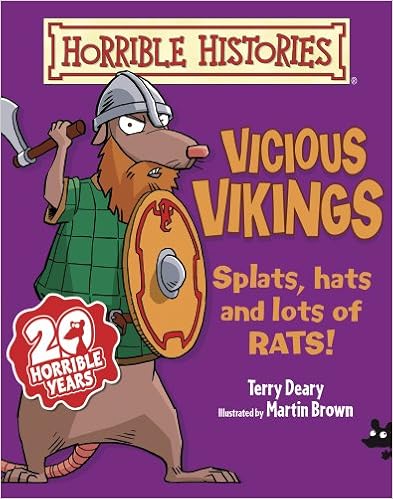
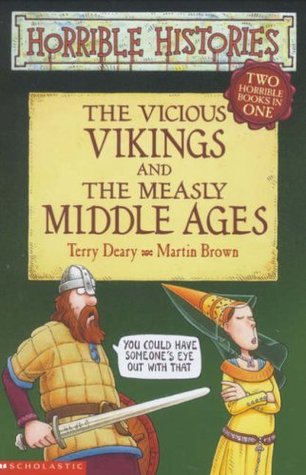
Publication date 1993–2013 Horrible Histories is a series of illustrated history books published in the United Kingdom by, and part of the. They are designed to engage children in history by presenting the unusual, gory, or unpleasant aspects in a tongue-in-cheek manner in contrast to the formality of lessons taught in school.
Laurence Rickard - Horrible Histories “Literally” Viking Song 4.
The series has proved exceptionally successful in terms of commercial revenue. The books are written by, and Neil Tonge and illustrated by,,, and Kate Sheppard. The first titles in the series, The Terrible Tudors and The Awesome Egyptians, were published in June 1993. As of 2011 with more than 60 titles in the series, the books have sold over 25 million copies in over 30 languages. The books have had with newspapers such as The Telegraph, as well as audio-book tie-ins with breakfast cereals. Deary announced that the series would officially come to an end in 2013.
The Telegraph said 'after Deary was reported to have given up the bestselling series because he had run out of tales to tell.his publisher would not risk putting out any new ones'. Deary says he cannot write a new book unless commissioned, and though he has not been told to stop writing, he has not explicitly been asked to continue, citing the gamble of a new book, 'when you've got 60 titles there that you can rework and freshen up for the new audiences that are growing up all the time', as a probable cause. Contents • • • • • • • • • • • • • • • • • • Development [ ] Deary discovered he had a knack for writing in his high school years. Paper Mario Free Download For Mac more. He said, 'I was clearly good at it, getting good marks, but no teacher ever said to me: you should try to do something with this'. Instead, he pursued acting, and the writing 'eventually stemmed from that'. Terry Deary studied at drama college and worked as an actor-teacher at the TIE company in Wales.
He then became a theatre director and began to write plays for children. Many of his TIE plays were eventually rewritten and adapted into the Horrible Histories book series. Deary said 'I was in this small touring company, taking plays for children round Welsh village halls. I did find I had this facility for knocking ideas into scripts'.
After a particularly successful tour of a play called The Custard Kid, about a 'cowardly cowboy', Deary decided he wanted to immortalise the production, so turned it into a book and sent it out to publishers. The 24th publisher said yes to the publication of the work by Deary, now around 30 years old. By the time the idea of Horrible Histories was presented to him by his publisher, Deary had written around 50 children's novels. The Guardian explains, 'they wanted a 'history joke book' and – when he protested that he knew nothing about history – offered to provide the facts to go with the gags'. Deary explains the series' inception this: 'The publishers originally asked for a joke book with a history theme. They said, ‘Put in a few interesting facts to break up the jokes because some of your jokes are very bad.’ And when I looked at the facts, I found they were much more interesting than the jokes. So we ended up with a fact book with jokes.
We created a new genre'. The fifth book in the series, Blitzed Brits, was published in 1995, by chance coinciding with the 50th anniversary of VE day.
The book reached no. 1 on the bestseller list. Deary decided that the book only gave the British viewpoint during World War II. Therefore, Deary wrote Woeful Second World War, focusing on experiences in France, Poland, Germany and Russia during the war. The book was published in September 1999, which coincided with the 60th anniversary of the outbreak of World War II In 2003, to celebrate the 10th anniversary, Scholastic held a contest to find Horrible Histories' Brainiest Boffin. Deary played the Quizmaster and through a series of rounds, gradually eliminated five of the six finalists to be invited to the London vaults from 500 applicants. Deary eventually returned to the stage.
Mad Millennium was commissioned by director, who was a fellow TIE participant 25 years before. He suggested turning the books into large-scale theatre productions.
Deary was happy to return to writing plays. By the early 2010s, Deary decided that the series had naturally come to an end. He said 'It has had a good run, it's had a better run than most children's series', and added that while his publishers have not officially stopped the series, there was 'a general feeling' it would finish. The Guardian explains, 'Deary long ago handed over the reins for [his franchise], saying he's more than happy to leave it in the hands of others'. This includes to companies like the Birmingham Stage Company that puts on stage plays adapted from his books, and CBBC that has broadcast an award-winning live-action adaption of his books since 2009. The Horrible Histories franchise has expanded into video games, toys, magazines, and a gameshow.
In 2007, the original series began to be republished with a new look and new content. The new books had altered information on the back cover, an index and a brighter, redesigned front cover.
Around the same time the Horrible Histories live action TV series aired, many of the books were republished as TV tie-ins. In 2013, many of the books were republished in a '20 horrible years' theme. Approach [ ].
” from Terry Deary, The Guardian 12 August 2003 Deary commented in interview, 'if I had it my way, I wouldn't have schools at all. They don't educate, they just keep kids off the streets. But my books educate, because they prepare kids for life.It's outrageous, why don't we start telling children the truth about history?
I hope my books do just that.' Horrible Histories are designed to engage and enthuse the reader about a subject while appearing subversive, primarily aiming to entertain with a background educative purpose. Deary views himself as a kid who wants to share facts with other kids, and as a writer who wishes to 'entertain first and inform second'. He does not respect authors who follow either extreme, that is, those who either only inform or only entertain.
He believes that 'readers are more important than writers and their needs have to come first' and that if the writer engages the reader, they will retain more knowledge from the work. The series has a on the accuracy and validity of history.
An introduction to one of the books in series states 'History can be horrible. Horribly hard to learn. The trouble is it keeps on changing. In history a 'fact' is sometimes not a fact at all.
Really it's just someone's 'opinion'. And opinions can be different for different people. Teachers will try to tell you there are 'right' and 'wrong' answers even if there aren't.' Many of Deary's books make very serious points, underneath all the jokes and gore. He often comments on whether the modern era is as vile as previous eras, and questions the reader's morals and patriotism. Deary explains 'I'd basically concluded [The British Empire] was one of the worst things to happen to the planet.
So I deployed the facts that illustrate that'. The Guardian explains 'The last chapter of Ruthless Romans portrays modern-day Zimbabwe and essentially asks, is this any different?' The musical stage show Barmy Britain, co-written by Deary, 'features a finale whose sarcastic references to burger bars, bankers and internet dating leave its young audience in little doubt that whatever the crazed excesses of our ancestors, future generations will doubtless consider us every bit as loopy'. When informed by a Jewish mother that her Rabbi told her not to introduce her children to the Holocaust before 13 years old, and that her 6-year-old had read it in Horrible Histories, Deary replied: 'Sorry, but what am I supposed to do – lie to children?' Deary is very distrustful of the establishment. He said 'I was beaten, bullied and abused at school in the name of passing exams. It taught me nothing and I had to break out.
So I started challenging authority at school, really, and just kind of never stopped'. He didn't reply to Tony Blair's invitation to come to No 10, telling The Guardian 'The only politician ever to have entered parliament with honourable intentions, was Guy Fawkes'. He also declined an invitation to meet the Queen, and said he was 'deeply disappointed' that the BBC's diamond jubilee coverage included a Horrible Histories sketch live from Tower Bridge. ” from Terry Deary, The Guardian 14 July 2012 Deary uses researchers for all Horrible Histories often in specialised fields, such as a military history. While researching his books, he immerses himself in the period so he is in the right context, compiling much more information than he needs. He tends to exclude all the 'boring facts' such as dates, because, he maintains 'dates don't matter. Human experience matters'.
He wishes to avoid 'preaching' the value of history, instead focusing on the wonders of human nature, and asking how we each would behave in other people's shoes. The books make use of various media techniques, including cartoons (here by ) Deary uses many generic literary conventions to make his books more accessible to his readers. He deliberately writes in prose styles that follow natural speech cadences. He also frequently uses and. Deary considered poetry to be 'another weapon in the writer's armoury' rather than a specialised form that may only be used in specific circumstances.
He maintains that the impersonal language used in textbooks alienates the reader. He therefore uses the to talk directly to the reader, as if he were talking to them in real life. He views Horrible Histories as one of the few non-fiction or fiction series which utilise this 'underused style of writing'. •, House of Adventure, URL retrieved 7 April 2008 • • ^ The Telegraph 19 June 2011. • ^ De Groot, Jerome (2009).. Consuming history: historians and heritage in contemporary popular culture.
Retrieved 9 July 2011. • Yeshin, Tony (2006).. Sales promotion. Thomson Learning.
Retrieved 16 July 2011. • Moreton, Cole (7 April 2013)..
London: The Telegraph. Retrieved 2013-04-08. • ^ Jon Henley (14 July 2012).. London: The Guardian. Retrieved 2014-04-17.
• ^ Carter, James (2001).. Creating Writers: A Creative Writing Manual for Schools. Pp. 115, 167, 169–170. Retrieved 9 July 2011. • Books (1 September 2009).. London: Telegraph.
Retrieved 2014-04-17. 2 April 2013. Retrieved 2014-04-17. Retrieved 2014-04-17.
• • Wolfisz, Francine (22 May 2008).. Bucks Free Press. Archived from on 19 February 2012. Retrieved 18 July 2011. • ^ Lockwood, Michael (2008).. Promoting Reading for Pleasure in the Primary School. SAGE Publications.
Retrieved 2 July 2011. • ^ Gardner, Lyn (10 May 2003).. The Guardian. London: Guardian News and Media Limited. Retrieved 12 July 2011. • Gamble, Nicki (2000)..
ICT and literacy: information and communications technology, media, reading and writing. Retrieved 18 April 2011. • ^, House of Books, URL retrieved 24 December 2006 • Frost Bob (2010).. Retrieved 2010-12-19.
•, House of Books, URL retrieved Fri 26 October, 17:51:52 CEST 2007 • ^ De Groot, Jerome (2009).. Consuming history: historians and heritage in contemporary popular culture. Retrieved 7 July 2011. • Martin, Andrew (2000).. Napoleon the novelist. Polity Press (UK) and Blackwell Publishers Ltd (US). Retrieved 10 July 2011.
• Gamble, Nicki (2000).. ICT and literacy: information and communications technology, media, reading and writing. Retrieved 18 April 2011. Retrieved 14 July 2011. • Dominic Wyse and Russell Jones (2001)..
Teaching English, Language and Literacy Guild Wars 2 Pdf here. . Retrieved 19 April 2011. • Allen, Janet (1999).. Words, words, words: teaching vocabulary in grades 4–12.
Stenhouse Publishers. Retrieved 19 April 2011. • Stern, Julian (1999)..
Developing as a teacher of history. Chris Kington Publishing. Retrieved 19 April 2011.
• Beth Reid and Amanda Batten (2006).. Advanced Book Search Make School Make Sense for Me: Children and Young People with Autism Speak Out. The National Autistic Society. Retrieved 19 April 2011. • Mallett, Margaret (2010)..
Choosing and Using Fiction and Non-Fiction 3–11. Retrieved 19 April 2011. • Mallett, Margaret (2010).. Choosing and Using Fiction and Non-Fiction 3–11.
Retrieved 19 April 2011. • Mallett, Margaret (2010).. Choosing and Using Fiction and Non-Fiction 3–11.
Retrieved 19 April 2011. • Teare, Barry (2007).. Help Your Talented Child: An Essential Guide for Parents. Retrieved 16 July 2011. • David Zipes, Jack. 'The Oxford encyclopedia of children's literature'. Missing or empty url= () • Grainger, Teresa (2004)..
The RoutledgeFalmer reader in language and literacy. Retrieved 10 July 2011. • Steinberg, Shirley R.
Teen life in Europe. Greenwood Press. Retrieved 2 July 2011.
• Kostuli, Triantafillia (2005).. Writing in context(s): textual practices and learning processes in sociocultural settings.
Springer Science+Business Media Inc. Retrieved 16 July 2011. • Arnall, Judy (2007).. Discipline Without Distress.
Retrieved 19 April 2011. Retrieved 13 July 2011. Witch Reviews. Retrieved 13 July 2011.
• Sanger, Andrew.. The Green Guide. Retrieved 16 July 2011.
• McQuoid Tammy.. Abisi Curriculum. Retrieved 2010-12-19. Horrible Histories: News. Scholastic (UK) Ltd. Retrieved 10 July 2011.
• • • • • • ^ • • • •. Scholastic Children's Books: Horrible Histories. Scholastic Ltd. Retrieved 10 July 2011.
• • • • › Terry Deary (7 September 2009).. Retrieved 2014-04-17.
• • External links [ ] • • • • • • 10 May 2003 The Guardian •. Interview with Dreary • Daily Telegraph 5 June 2011' • • •.